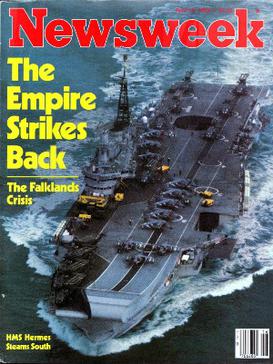
The conflict was a major episode in the protracted dispute over the territories sovereignty. Argentina asserted (and maintains) that the islands are Argentine territory, and the Argentine government thus characterised its military action as the reclamation of its own territory. The British government regarded the action as an invasion of a territory that had been a Crown colony since 1841. Falkland Islanders, who have inhabited the islands since the early 19th century, are predominantly descendants of British settlers, and strongly favour British sovereignty. Neither state officially declared war, although both governments declared the Islands a war zone. Hostilities were almost exclusively limited to the territories under dispute and the area of the South Atlantic where they lie.
The conflict has had a strong effect in both countries and has been the subject of various books, articles, films, and songs. Patriotic sentiment ran high in Argentina, but the outcome prompted large protests against the ruling military government, hastening its downfall. In the United Kingdom, the Conservative government, bolstered by the successful outcome, was re-elected with an increased majority the following year. The cultural and political effect of the conflict has been less in the UK than in Argentina, where it remains a common topic for discussion.
Diplomatic relations between the United Kingdom and Argentina were restored in 1989 following a meeting in Madrid, at which the two governments issued a joint statement. No change in either countrys position regarding the sovereignty of the Falkland Islands was made explicit. In 1994, Argentinas claim to the territories was added to its constitution.FALKLAND WARR

 Newspaper from North Macedonia
 - Social interactions and entertainment - 1 - 23 Aug 19 06:37


 Facebook
 Instagram
 Discord
 Reddit