
World War I (part 3) | Tweet
Published in Greece  - Social interactions and entertainment - 0 - 22 Jan 20 00:35
Prelude
Sarajevo assassination
On 28 June 1914, Archduke Franz Ferdinand, heir presumptive to the Austro-Hungarian Empire, visited the Bosnian capital, Sarajevo. A group of six assassins (Cvjetko Popović, Gavrilo Princip, Muhamed Mehmedbašić, Nedeljko Čabrinović, Trifko Grabež, and Vaso Čubrilović) from the Yugoslavist group Mlada Bosna, supplied with arms by the Serbian Black Hand, gathered on the street where the Archdukes motorcade was to pass, with the intention of assassinating him. The political objective of the assassination was to break off Austria-Hungarys South Slav provinces, which Austria-Hungary had annexed from the Ottoman Empire, so they could be combined into a Yugoslavia.Čabrinović threw a grenade at the car, but missed. Some nearby were injured by the blast, but Ferdinands convoy carried on. The other assassins failed to act as the cars drove past them.
 
About an hour later, when Ferdinand was returning from a visit at the Sarajevo Hospital with those wounded in the assassination attempt, the convoy took a wrong turn into a street where, by coincidence, Princip stood. With a pistol, Princip shot and killed Ferdinand and his wife Sophie. Although they were reportedly not personally close, the Emperor Franz Joseph was profoundly shocked and upset. The reaction among the people in Austria, however, was mild, almost indifferent. As historian Zbyněk Zeman later wrote, the event almost failed to make any impression whatsoever. On Sunday and Monday (28 and 29 June), the crowds in Vienna listened to music and drank wine, as if nothing had happened. Nevertheless, the political effect of the murder of the heir to the throne was significant, and was described by historian Christopher Clark on the BBC Radio 4 series Month of Madness as a 9/11 effect, a terrorist event charged with historic meaning, transforming the political chemistry in Vienna
Expansion of violence in Bosnia and Herzegovina
The Austro-Hungarian authorities encouraged the subsequent anti-Serb riots in Sarajevo, in which Bosnian Croats and Bosniaks killed two Bosnian Serbs and damaged numerous Serb-owned buildings
 
 Violent actions against ethnic Serbs were also organised outside Sarajevo, in other cities in Austro-Hungarian-controlled Bosnia and Herzegovina, Croatia and Slovenia. Austro-Hungarian authorities in Bosnia and Herzegovina imprisoned and extradited approximately 5,500 prominent Serbs, 700 to 2,200 of whom died in prison. A further 460 Serbs were sentenced to death. A predominantly Bosniak special militia known as the Schutzkorps was established and carried out the persecution of Serbs
July Crisis
The assassination led to a month of diplomatic manoeuvring between Austria-Hungary, Germany, Russia, France and Britain, called the July Crisis. Austria-Hungary correctly believed that Serbian officials (especially the officers of the Black Hand) were involved in the plot to murder the Archduke, and wanted to finally end Serbian interference in Bosnia. On 23 July, Austria-Hungary delivered to Serbia the July Ultimatum, a series of ten demands that were made intentionally unacceptable, in an effort to provoke a war with Serbia. Serbia decreed general mobilisation on 25 July. Serbia accepted all the terms of the ultimatum except for article six, which demanded that Austrian delegates be allowed in Serbia for the purpose of participation in the investigation into the assassination. Following this, Austria broke off diplomatic relations with Serbia and, the next day, ordered a partial mobilisation. Finally, on 28 July 1914, a month after the assassination, Austria-Hungary declared war on Serbia.
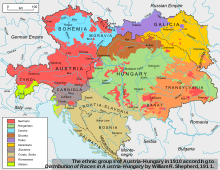 
Ethno-linguistic map of Austria-Hungary, 1910. Bosnia-Herzegovina was annexed in 1908
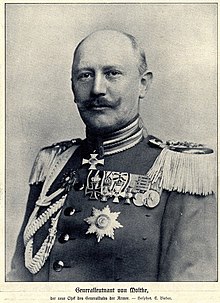
On 25 July, Russia, in support of Serbia, declared partial mobilisation against Austria-Hungary. On 30 July, Russia ordered general mobilisation. German Chancellor Bethmann-Hollweg waited until the 31st for an appropriate response, when Germany declared Erklärung des Kriegszustandes, or Statement on the war status. Kaiser Wilhelm II asked his cousin, Tsar Nicolas II, to suspend the Russian general mobilisation. When he refused, Germany issued an ultimatum demanding its mobilisation be stopped, and a commitment not to support Serbia. Another was sent to France, asking her not to support Russia if it were to come to the defence of Serbia. On 1 August, after the Russian response, Germany mobilised and declared war on Russia. This also led to the general mobilisation in Austria-Hungary on 4 August.The German government issued demands to France that it remain neutral as they had to decide which deployment plan to implement, it being extremely difficult to change the deployment whilst it was underway. The modified German Schlieffen Plan, Aufmarsch II West, would deploy 80% of the army in the west, while Aufmarsch I Ost and Aufmarsch II Ost would deploy 60% in the west and 40% in the east. The French did not respond, but sent a mixed message by ordering their troops to withdraw 10 km (6 mi) from the border to avoid any incidents, and at the same time ordered the mobilisation of their reserves. Germany responded by mobilising its own reserves and implementing.On 1 August, Wilhelm ordered General Helmuth von Moltke the Younger to march the whole of the ... army to the East after being wrongly informed that the British would remain neutral if France was not attacked. Moltke told the Kaiser that attempting to redeploy a million men was unthinkable, and that making it possible for the French to attack the Germans in the rear would prove disastrous. Yet Wilhelm insisted that the German army should not march into Luxembourg until he received a telegram sent by his cousin George V, who made it clear that there had been a misunderstanding. Eventually the Kaiser told Moltke, Now you can do what you want.
 On 2 August, Germany occupied Luxembourg, and on 3 August declared war on France; on the same day, they sent the Belgian government an ultimatum demanding unimpeded right of way through any part of Belgium, which was refused. Early on the morning of 4 August, the Germans invaded; King Albert ordered his military to resist and called for assistance under the 1839 Treaty of London. Britain demanded Germany comply with the Treaty and respect Belgian neutrality; it declared war on Germany at 19:00 UTC on 4 August 1914 (effective from 23:00), following an unsatisfactory reply.
Sarajevo assassination
On 28 June 1914, Archduke Franz Ferdinand, heir presumptive to the Austro-Hungarian Empire, visited the Bosnian capital, Sarajevo. A group of six assassins (Cvjetko Popović, Gavrilo Princip, Muhamed Mehmedbašić, Nedeljko Čabrinović, Trifko Grabež, and Vaso Čubrilović) from the Yugoslavist group Mlada Bosna, supplied with arms by the Serbian Black Hand, gathered on the street where the Archdukes motorcade was to pass, with the intention of assassinating him. The political objective of the assassination was to break off Austria-Hungarys South Slav provinces, which Austria-Hungary had annexed from the Ottoman Empire, so they could be combined into a Yugoslavia.Čabrinović threw a grenade at the car, but missed. Some nearby were injured by the blast, but Ferdinands convoy carried on. The other assassins failed to act as the cars drove past them.
About an hour later, when Ferdinand was returning from a visit at the Sarajevo Hospital with those wounded in the assassination attempt, the convoy took a wrong turn into a street where, by coincidence, Princip stood. With a pistol, Princip shot and killed Ferdinand and his wife Sophie. Although they were reportedly not personally close, the Emperor Franz Joseph was profoundly shocked and upset. The reaction among the people in Austria, however, was mild, almost indifferent. As historian Zbyněk Zeman later wrote, the event almost failed to make any impression whatsoever. On Sunday and Monday (28 and 29 June), the crowds in Vienna listened to music and drank wine, as if nothing had happened. Nevertheless, the political effect of the murder of the heir to the throne was significant, and was described by historian Christopher Clark on the BBC Radio 4 series Month of Madness as a 9/11 effect, a terrorist event charged with historic meaning, transforming the political chemistry in Vienna
Expansion of violence in Bosnia and Herzegovina
The Austro-Hungarian authorities encouraged the subsequent anti-Serb riots in Sarajevo, in which Bosnian Croats and Bosniaks killed two Bosnian Serbs and damaged numerous Serb-owned buildings
 Violent actions against ethnic Serbs were also organised outside Sarajevo, in other cities in Austro-Hungarian-controlled Bosnia and Herzegovina, Croatia and Slovenia. Austro-Hungarian authorities in Bosnia and Herzegovina imprisoned and extradited approximately 5,500 prominent Serbs, 700 to 2,200 of whom died in prison. A further 460 Serbs were sentenced to death. A predominantly Bosniak special militia known as the Schutzkorps was established and carried out the persecution of Serbs
July Crisis
The assassination led to a month of diplomatic manoeuvring between Austria-Hungary, Germany, Russia, France and Britain, called the July Crisis. Austria-Hungary correctly believed that Serbian officials (especially the officers of the Black Hand) were involved in the plot to murder the Archduke, and wanted to finally end Serbian interference in Bosnia. On 23 July, Austria-Hungary delivered to Serbia the July Ultimatum, a series of ten demands that were made intentionally unacceptable, in an effort to provoke a war with Serbia. Serbia decreed general mobilisation on 25 July. Serbia accepted all the terms of the ultimatum except for article six, which demanded that Austrian delegates be allowed in Serbia for the purpose of participation in the investigation into the assassination. Following this, Austria broke off diplomatic relations with Serbia and, the next day, ordered a partial mobilisation. Finally, on 28 July 1914, a month after the assassination, Austria-Hungary declared war on Serbia.
Ethno-linguistic map of Austria-Hungary, 1910. Bosnia-Herzegovina was annexed in 1908
On 25 July, Russia, in support of Serbia, declared partial mobilisation against Austria-Hungary. On 30 July, Russia ordered general mobilisation. German Chancellor Bethmann-Hollweg waited until the 31st for an appropriate response, when Germany declared Erklärung des Kriegszustandes, or Statement on the war status. Kaiser Wilhelm II asked his cousin, Tsar Nicolas II, to suspend the Russian general mobilisation. When he refused, Germany issued an ultimatum demanding its mobilisation be stopped, and a commitment not to support Serbia. Another was sent to France, asking her not to support Russia if it were to come to the defence of Serbia. On 1 August, after the Russian response, Germany mobilised and declared war on Russia. This also led to the general mobilisation in Austria-Hungary on 4 August.The German government issued demands to France that it remain neutral as they had to decide which deployment plan to implement, it being extremely difficult to change the deployment whilst it was underway. The modified German Schlieffen Plan, Aufmarsch II West, would deploy 80% of the army in the west, while Aufmarsch I Ost and Aufmarsch II Ost would deploy 60% in the west and 40% in the east. The French did not respond, but sent a mixed message by ordering their troops to withdraw 10 km (6 mi) from the border to avoid any incidents, and at the same time ordered the mobilisation of their reserves. Germany responded by mobilising its own reserves and implementing.On 1 August, Wilhelm ordered General Helmuth von Moltke the Younger to march the whole of the ... army to the East after being wrongly informed that the British would remain neutral if France was not attacked. Moltke told the Kaiser that attempting to redeploy a million men was unthinkable, and that making it possible for the French to attack the Germans in the rear would prove disastrous. Yet Wilhelm insisted that the German army should not march into Luxembourg until he received a telegram sent by his cousin George V, who made it clear that there had been a misunderstanding. Eventually the Kaiser told Moltke, Now you can do what you want.
On 2 August, Germany occupied Luxembourg, and on 3 August declared war on France; on the same day, they sent the Belgian government an ultimatum demanding unimpeded right of way through any part of Belgium, which was refused. Early on the morning of 4 August, the Germans invaded; King Albert ordered his military to resist and called for assistance under the 1839 Treaty of London. Britain demanded Germany comply with the Treaty and respect Belgian neutrality; it declared war on Germany at 19:00 UTC on 4 August 1914 (effective from 23:00), following an unsatisfactory reply.Support
tsiggertsiggertsiggerBorci8Comments (0)
 Facebook
 Instagram
 Discord
 Reddit