Indian support for the Allies
Germany attempted to use Indian nationalism and pan-Islamism to its advantage
, instigating uprisings in India, andÂ
sending a mission that urged Afghanistan to join the war on the side of Central Powers. However, contrary to British fears of a revolt in India, the outbreak of the war saw an unprecedented outpouring of loyalty and goodwill towards Britain.


 Indian political leaders from theÂ
Indian National Congress and other groups were eager to support the British war effort, since they believed that strong support for the war effort would further the cause ofÂ
Indian Home Rule.TheÂ
Indian Army in fact outnumbered the British Army at the beginning of the war; about 1.3 million Indian soldiers and labourers served in Europe, Africa, and the Middle East, while the central government and theÂ
princely states sent large supplies of food, money, and ammunition. In all, 140,000 men served on the Western Front and nearly 700,000 in the Middle East. Casualties of Indian soldiers totalled 47,746 killed and 65,126 wounded during World War I. The suffering engendered by the war, as well as the failure of the British government to grant self-government to India after the end of hostilities, bred disillusionment and fuelledÂ
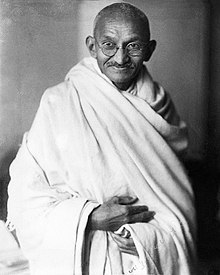
the campaign for full independence that would be led byÂ
Mohandas K. Gandhi and others.
Western Front
Trench warfare begins
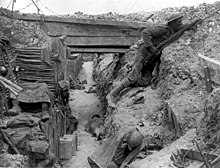
Military tactics developed before World War I failed to keep pace with advances in technology and had become obsolete. These advances had allowed the creation of strong defensive systems, which out-of-date military tactics could not break through for most of the war.Â
Barbed wire was a significant hindrance to massed infantry advances, whileÂ
artillery, vastly more lethal than in the 1870s, coupled withÂ
machine guns, made crossing open ground extremely difficult.

Commanders on both sides failed to develop tactics forÂ
breaching entrenched positions without heavy casualties. In time, however, technology began to produce new offensive weapons, such asÂ
gas warfare and theÂ
tank.Â
After theÂ
First Battle of the Marne (5–12 September 1914), Allied and German forces unsuccessfully tried to outflank each other, a series of manoeuvres later known as the
Race to the Sea. By the end of 1914, the opposing forces were left confronting each other along an uninterrupted line of entrenched positions fromÂ
Alsace to Belgiums North Sea coast. Since the Germans were able to choose where to stand, they normally had the advantage of the high ground; in addition, their trenches tended to be better built, since Anglo-French trenches were initially intended as temporary, preparatory to breaking the German defences.
Both sides tried to break the stalemate using scientific and technological advances. On 22 April 1915, at theÂ
Second Battle of Ypres, the Germans (violating theÂ
Hague Convention) usedÂ
chlorine gas for the first time on the Western Front. Several types of gas soon became widely used by both sides, and though it never proved a decisive, battle-winning weapon, poison gas became one of the most-feared and best-remembered horrors of the war


Tanks were developed by Britain and France and were first used in combat by the British during theÂ
Battle of Flers–Courcelette (part of the Battle of the Somme) on 15 September 1916, with only partial success. However, their effectiveness would grow as the war progressed; the Allies built tanks in large numbers, whilst the Germans employed only a few of their own design, supplemented by captured Allied tanks.


 - Social interactions and entertainment - 0 - 03 Feb 20 03:01
 Facebook
 Instagram
 Discord
 Reddit