
World War I (Part 7) | Tweet
Published in Greece  - Social interactions and entertainment - 0 - 19 Mar 20 07:10
War in the Balkans
Faced with Russia in the east, Austria-Hungary could spare only one-third of its army to attack Serbia. After suffering heavy losses, the Austrians briefly occupied the Serbian capital, Belgrade. A Serbian counter-attack in the Battle of Kolubara succeeded in driving them from the country by the end of 1914. For the first ten months of 1915, Austria-Hungary used most of its military reserves to fight Italy. German and Austro-Hungarian diplomats, however, scored a coup by persuading Bulgaria to join the attack on Serbia. The Austro-Hungarian provinces of Slovenia, Croatia and Bosnia provided troops for Austria-Hungary in the fight with Serbia, Russia and Italy. Montenegro allied itself with Serbia.
 
Bulgaria declared war on Serbia on 12 October 1915 and joined in the attack by the Austro-Hungarian army under Mackensens army of 250,000 that was already underway. Serbia was conquered in a little more than a month, as the Central Powers, now including Bulgaria, sent in 600,000 troops total. The Serbian army, fighting on two fronts and facing certain defeat, retreated into northern Albania. The Serbs suffered defeat in the Battle of Kosovo. Montenegro covered the Serbian retreat towards the Adriatic coast in the Battle of Mojkovac in 6–7 January 1916, but ultimately the Austrians also conquered Montenegro. The surviving Serbian soldiers were evacuated by ship to Greece.  After conquest, Serbia was divided between Austro-Hungary and Bulgaria.
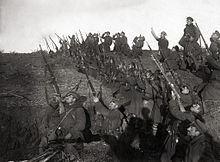 
In late 1915, a Franco-British force landed at Salonica in Greece to offer assistance and to pressure its government to declare war against the Central Powers. However, the pro-German King Constantine I dismissed the pro-Allied government of Eleftherios Venizelos before the Allied expeditionary force arrived.  The friction between the King of Greece and the Allies continued to accumulate with the National Schism, which effectively divided Greece between regions still loyal to the king and the new provisional government of Venizelos in Salonica. After intense negotiations and an armed confrontation in Athens between Allied and royalist forces (an incident known as Noemvriana), the King of Greece resigned and his second son Alexander took his place; Greece officially joined the war on the side of the Allies in June 1917.The Macedonian Front was initially mostly static. French and Serbian forces retook limited areas of Macedonia by recapturing Bitola on 19 November 1916 following the costly Monastir Offensive, which brought stabilisation of the front.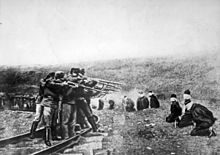
The Battle of Skra di Legen (Skora di Legen) was a two-day battle which took place at the Skra fortified position, located northeast of Mount Paiko, which is north-west of Thessaloniki, on May 29–30, 1918, on the Macedonian front of World War I. The battle was the first large-scale employment of Greek troops of the Army of National Defence (Greece had joined united the war in summer 1917) on the front, and resulted in the capture of the heavily fortified Bulgarian positions.The Allied force comprised three Greek divisions of the National Defence Army Corps under Lieutenant General Emmanouil Zymvrakakis, plus one French brigade. The three Greek divisions included the Archipelago Division under Major General Dimitrios Ioannou, the Crete Division under Major General Panagiotis Spiliadis, and the Serres Division under Lieutenant Colonel Epameinondas Zymvrakakis. The 5th and 6th Regiments from the Archipelago Division were in the center, the 7th and 8th Regiments from the Crete Division were on the right flank and the 1st Regiment of the Serres Division was on the left flank.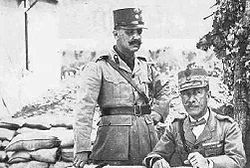
Allied troops finally made a breakthrough in September 1918 in the Vardar Offensive.Â
The Vardar Offensive  was a World War I military operation, fought between 15 and 29 September 1918. The operation took place during the final stage of the Balkans Campaign. On September 15, a combined force of Serbian, French and Greek troops attacked the Bulgarian-held trenches in Dobro Pole (Good Field), at the time part of the Kingdom of Serbia (present day North Macedonia). The assault and the preceding artillery preparation had devastating effects on Bulgarian morale, eventually leading to mass desertions.
 
On September 18, a second Entente formation assaulted the Bulgarian positions in the vicinity of Lake Doiran. Effectively employing machine gun and artillery fire the Bulgarians managed to stall the Allied advance on the Doiran sector. However the collapse of the front at Dobro Pole forced the Bulgarians to withdraw from Doiran. The Allies pursued the German 11th Army and the Bulgarian 1st Army, while pushing deeper into Vardar Macedonia. By 29 September, the Allies had captured the former HQ of Uskub, thus endangering the remnants of the 11th Army.
The Bulgarians were defeated at the Battle of Dobro Pole, and by 25 September British and French troops had crossed the border into Bulgaria proper as the Bulgarian army collapsed. Bulgaria capitulated four days later, on 29 September 1918. The German high command responded by despatching troops to hold the line, but these forces were far too weak to reestablish a front.

The disappearance of the Macedonian Front meant that the road to Budapest and Vienna was now opened to Allied forces. Hindenburg and Ludendorff concluded that the strategic and operational balance had now shifted decidedly against the Central Powers and, a day after the Bulgarian collapse, insisted on an immediate peace settlemen
Faced with Russia in the east, Austria-Hungary could spare only one-third of its army to attack Serbia. After suffering heavy losses, the Austrians briefly occupied the Serbian capital, Belgrade. A Serbian counter-attack in the Battle of Kolubara succeeded in driving them from the country by the end of 1914. For the first ten months of 1915, Austria-Hungary used most of its military reserves to fight Italy. German and Austro-Hungarian diplomats, however, scored a coup by persuading Bulgaria to join the attack on Serbia. The Austro-Hungarian provinces of Slovenia, Croatia and Bosnia provided troops for Austria-Hungary in the fight with Serbia, Russia and Italy. Montenegro allied itself with Serbia.
Bulgaria declared war on Serbia on 12 October 1915 and joined in the attack by the Austro-Hungarian army under Mackensens army of 250,000 that was already underway. Serbia was conquered in a little more than a month, as the Central Powers, now including Bulgaria, sent in 600,000 troops total. The Serbian army, fighting on two fronts and facing certain defeat, retreated into northern Albania. The Serbs suffered defeat in the Battle of Kosovo. Montenegro covered the Serbian retreat towards the Adriatic coast in the Battle of Mojkovac in 6–7 January 1916, but ultimately the Austrians also conquered Montenegro. The surviving Serbian soldiers were evacuated by ship to Greece.  After conquest, Serbia was divided between Austro-Hungary and Bulgaria.
In late 1915, a Franco-British force landed at Salonica in Greece to offer assistance and to pressure its government to declare war against the Central Powers. However, the pro-German King Constantine I dismissed the pro-Allied government of Eleftherios Venizelos before the Allied expeditionary force arrived.  The friction between the King of Greece and the Allies continued to accumulate with the National Schism, which effectively divided Greece between regions still loyal to the king and the new provisional government of Venizelos in Salonica. After intense negotiations and an armed confrontation in Athens between Allied and royalist forces (an incident known as Noemvriana), the King of Greece resigned and his second son Alexander took his place; Greece officially joined the war on the side of the Allies in June 1917.The Macedonian Front was initially mostly static. French and Serbian forces retook limited areas of Macedonia by recapturing Bitola on 19 November 1916 following the costly Monastir Offensive, which brought stabilisation of the front.
The Battle of Skra di Legen (Skora di Legen) was a two-day battle which took place at the Skra fortified position, located northeast of Mount Paiko, which is north-west of Thessaloniki, on May 29–30, 1918, on the Macedonian front of World War I. The battle was the first large-scale employment of Greek troops of the Army of National Defence (Greece had joined united the war in summer 1917) on the front, and resulted in the capture of the heavily fortified Bulgarian positions.The Allied force comprised three Greek divisions of the National Defence Army Corps under Lieutenant General Emmanouil Zymvrakakis, plus one French brigade. The three Greek divisions included the Archipelago Division under Major General Dimitrios Ioannou, the Crete Division under Major General Panagiotis Spiliadis, and the Serres Division under Lieutenant Colonel Epameinondas Zymvrakakis. The 5th and 6th Regiments from the Archipelago Division were in the center, the 7th and 8th Regiments from the Crete Division were on the right flank and the 1st Regiment of the Serres Division was on the left flank.
Allied troops finally made a breakthrough in September 1918 in the Vardar Offensive.Â
The Vardar Offensive  was a World War I military operation, fought between 15 and 29 September 1918. The operation took place during the final stage of the Balkans Campaign. On September 15, a combined force of Serbian, French and Greek troops attacked the Bulgarian-held trenches in Dobro Pole (Good Field), at the time part of the Kingdom of Serbia (present day North Macedonia). The assault and the preceding artillery preparation had devastating effects on Bulgarian morale, eventually leading to mass desertions.
On September 18, a second Entente formation assaulted the Bulgarian positions in the vicinity of Lake Doiran. Effectively employing machine gun and artillery fire the Bulgarians managed to stall the Allied advance on the Doiran sector. However the collapse of the front at Dobro Pole forced the Bulgarians to withdraw from Doiran. The Allies pursued the German 11th Army and the Bulgarian 1st Army, while pushing deeper into Vardar Macedonia. By 29 September, the Allies had captured the former HQ of Uskub, thus endangering the remnants of the 11th Army.
The Bulgarians were defeated at the Battle of Dobro Pole, and by 25 September British and French troops had crossed the border into Bulgaria proper as the Bulgarian army collapsed. Bulgaria capitulated four days later, on 29 September 1918. The German high command responded by despatching troops to hold the line, but these forces were far too weak to reestablish a front.
The disappearance of the Macedonian Front meant that the road to Budapest and Vienna was now opened to Allied forces. Hindenburg and Ludendorff concluded that the strategic and operational balance had now shifted decidedly against the Central Powers and, a day after the Bulgarian collapse, insisted on an immediate peace settlemen
Support
Franky Four FingerstsiggerComments (0)
 Facebook
 Instagram
 Discord
 Reddit