From Wikipedia, the free encyclopedia
Jump to navigationJump to searchFor other uses, seeÂ
Sport (disambiguation).
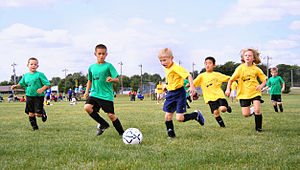 Sport in childhood
.Â
Association football, shown above, is aÂ
team sport which also provides opportunities to nurtureÂ
physical fitness andÂ
social interaction skills.
Sport includes all forms ofÂ
competitiveÂ
physical activity orÂ
games which, through casual or organized participation, at least in part aim to use, maintain or improve physical ability and skills while providing enjoyment to participants, and in some cases,Â
entertainment for spectators. Sports can bring positive results to ones physical health. Hundreds of sports exist, from those between single contestants, through to those with hundreds of simultaneous participants, either inÂ
teams or competing as individuals. In certain sports such asÂ
racing, many contestants may compete, simultaneously or consecutively, with one winner; in others, the contest (aÂ
match) is between two sides, each attempting to exceed the other. Some sports allow a tie or draw, in which there is no single winner; others provideÂ
tie-breaking methods to ensure one winner and one loser. A number of contests may be arranged in aÂ
tournament producing aÂ
champion. ManyÂ
sports leagues make an annual champion by arranging games in a regularÂ
sports season, followed in some cases byÂ
playoffs.Sport is generally recognised as system of activities which are based in physicalÂ
athleticism or physicalÂ
dexterity, with the largest major competitions such as theÂ
Olympic Games admitting only sports meeting this definition, and other organisations such as theÂ
Council of Europe using definitions precluding activities without a physical element from classification as sports. However, a number of competitive, but non-physical, activities claim recognition asÂ
mind sports. The International Olympic Committee (throughÂ
ARISF) recognises bothÂ
chess andÂ
bridge asÂ
bona fide sports, andÂ
SportAccord, the international sports federation association, recognises five non-physical sports: bridge, chess,Â
draughts (checkers),Â
Go andÂ
xiangqi,  and limits the number of mind games which can be admitted as sports.Sport is usually governed by a set ofÂ
rules orÂ
customs, which serve to ensure fair competition, and allow consistent adjudication of the winner. Winning can be determined by physical events such as scoringÂ
goals or crossing a line first. It can also be determined by judges who are scoring elements of the sporting performance, including objective or subjective measures such as technical performance or artistic impression.Records of performance are often kept, and for popular sports, this information may be widely announced or reported inÂ
sport news. Sport is also a major source of entertainment for non-participants, withÂ
spectator sport drawing large crowds toÂ
sport venues, and reaching wider audiences throughÂ
broadcasting.Â
Sport betting is in some cases severely regulated, and in some cases is central to the sport.According to A.T. Kearney, a consultancy, the global sporting industry is worth up to $620 billion as of 2013. The worlds most accessible and practised sport isÂ
running, whileÂ
association football is the most popular spectator sport.

 - Social interactions and entertainment - 0 - 30 Apr 20 06:52

 Facebook
 Instagram
 Discord
 Reddit