ErtuÄŸrul orÂ
Ertuğrul Gazi (
Ottoman Turkish: ارطغرل‎, romanized:Â
Erá¹oÄ¡rıl, died c. 1280)
 was the father ofÂ
Osman I.
 Little is known about ErtuÄŸruls life. According to Ottoman tradition, he was the son ofÂ
Suleyman Shah, the leader of theÂ
Kayı tribe (a claim which has come under criticism from many historians
) ofÂ
Oghuz Turks, who fled from westernÂ
Central Asia toÂ
Anatolia to escape theÂ
Mongol conquests, but he may instead have been the son ofÂ
Gündüz Alp.
 According to this legend, after the death of his father, ErtuÄŸrul and his followers entered the service of theÂ
Sultanate of Rum, for which he was rewarded with dominion over the town ofÂ
Söğüt on the frontier with theÂ
Byzantine Empire.
 This set off the chain of events that would ultimately lead to theÂ
founding of the Ottoman Empire.ErtuÄŸrul Gazi
ارطغرل
Uç bey of theÂ
Sultanate of RumReignPredecessorSuccessorBornDiedBurialSpouseIssueFull nameFatherMother

Tomb of ErtuÄŸrul GaziBiographyNothing is known with certainty about ErtuÄŸruls life, other than that he was the father of Osman; historians are thus forced to rely upon stories written about him by the Ottomans more than a century later, which are of questionable accuracy.
 An undated coin, supposedly from the time of Osman, with the text Minted by Osman son of Ertuğrul, suggests that Ertuğrul was a historical figure.
:31 Another coin reads Osman bin Ertuğrul bin Gündüz Alp,
 though Ertuğrul is traditionally considered the son of Suleyman Shah.
InÂ
EnverisÂ
Düsturname (1465) andÂ
Karamani Mehmet Pashas chronicle (before 1481), Suleyman Shah replaces Gündüz Alp as Ertugruls father. After
 Ottoman historianÂ
Aşıkpaşazades chronicles, the Suleyman Shah version became the official one.
 According to many turkish sources, ErtuÄŸrul had three brothers named; Sungur-tekin, GündoÄŸdu andÂ
Dündar.
 After the death of their father, ErtuÄŸrul with his motherÂ
Hayme Hatun,Â
Dündar and his followers from the Kayı Tribe migrated west into Anatolia and entered theÂ
Seljuk Sultanate of Rum, leaving his two brothers who took their clans towards the east.
 In this way, Kayı Tribe was divided into two parts. According to these later traditions, Ertuğrul was chief of his Kayı Tribe.
 As a result of his assistance to the Seljuks against the Byzantines, ErtuÄŸrul was granted lands inÂ
Karaca DaÄŸ, a mountainous area betweenÂ
Diyarbakır andÂ
Urfa, byÂ
Kayqubad I, the Seljuk Sultan of Rum. One account indicates that the Seljuk leaders rationale for granting ErtuÄŸrul land was for ErtuÄŸrul to repel any hostile incursion from the Byzantines or other adversary.
 Later, he received the village ofÂ
Söğüt which he conquered together with the surrounding lands. That village, where he later died, became the Ottoman capital under his son, Osman I.
 Osmans mother has been referred to asÂ
Halime Hatun in later myths, and there is a grave outside the Ertuğrul Gâzi Tomb which bears the name, but it is disputed.
According to many sources, he had two other sons in addition to Osman I:Â
Saru-Batu (Savci) Bey and Gündüz Bey.
 Like his son, Osman, and their descendants, ErtuÄŸrul is often referred to as aÂ
Ghazi, a heroic champion fighter for the cause ofÂ
Islam.
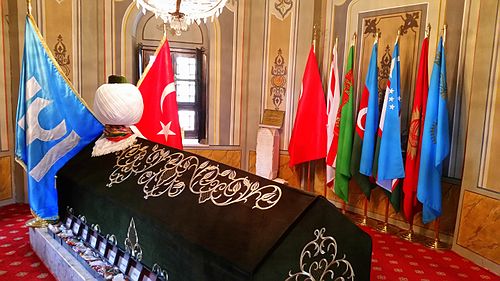
ErtuÄŸrul Ghazi TombLegacy

The last will of Ertugrul Gazi to his son SultanÂ
Osman I, unknown authorThe last will of Ertugrul Gazi to his son, Osman Gazi, in front of his tomb reads:
Lo, son! Offend me, offend not Shaykh Edebali. He is the light of our clan. His balance does not err by a dirham. Oppose me, oppose him not. If you oppose me, I will be sad and hurt. If you oppose him, my eyes will not look at you, even if they look they will not see. Our words are not for Edebali but for you dear. Consider what I have said my last will.— Ertuğrul Gazi
A tomb and mosque dedicated to ErtuÄŸrul is said to have been built by Osman I atÂ
Söğüt, but due to several rebuildings nothing certain can be said about the origin of these structures. The current mausoleum was built by sultanÂ
Abdul Hamid II in the late 19th century. The town of Söğüt celebrates an annual festival to the memory of the early Osmans.
:37TheÂ
Ottoman frigate Ertuğrul, launched in 1863, was named after him.
 TheÂ
ErtuÄŸrul Tekke Mosque (late 19th century) inÂ
Istanbul, Turkey and theÂ
ErtuÄŸrul Gazi Mosque inÂ
Ashgabat,Â
Turkmenistan (completed in 1998), are also named in his honor. The mosque in Turkmenistan was established by the Turkish government as a symbol of the link between Turkey and Turkmenistan.
In fictionErtugrul has been portrayed in the Turkish television seriesÂ
Kuruluş/Osmancık  (1988), adapted from a novel by the same name,
Â
Diriliş: Ertuğrul (2014—2019)
 and the sequelÂ
Kuruluş: Osman (2019).
This article contains Ottoman Turkish text, written from right to left with some Arabic letters and additional symbols joined. Without properÂ
rendering support, you may see unjoined letters or other symbols

 Newspaper from Albania
 - Social interactions and entertainment - 0 - 02 Nov 20 00:53


 Facebook
 Instagram
 Discord
 Reddit