
Hello everyone, today I will tell you about Chiloe and the great archipelago.
The Chiloé archipelago is located in southern Chile, between parallels 41º and 43º south latitude. It comprises a main island, the Isla Grande de Chiloé, and a large number of smaller islands and islets. The archipelago has an area of 9.181 km² and had a total population of 170.000 people aprox (2020).
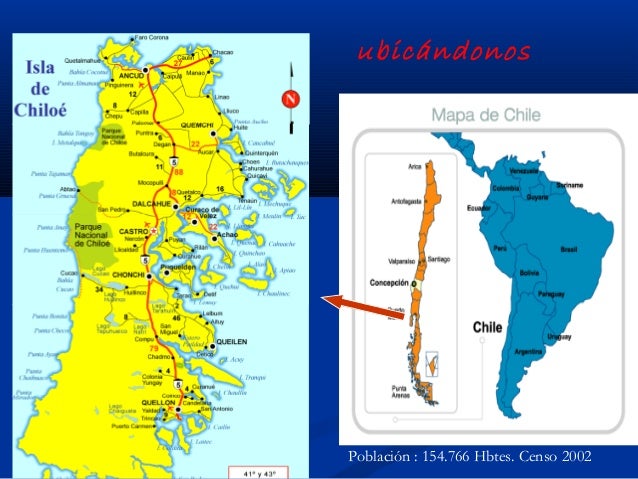
Among the main attractions of the island, we can find different places and islands to visit, such as the following:
- Great island of Chiloé
- Lemuy Island
- Quinchao Island
- Caucahue Island
- Tranqui
- San Pedro Island
- Guafo Island
- Mechuque
- Metalqui
- Quenac Island
- Quehui
- Apiao
- Quinchao
- MaulÃn
- Llingua
- Tac Island
- Chonchi Island
Here are some pictures of this wonderful and magical place:


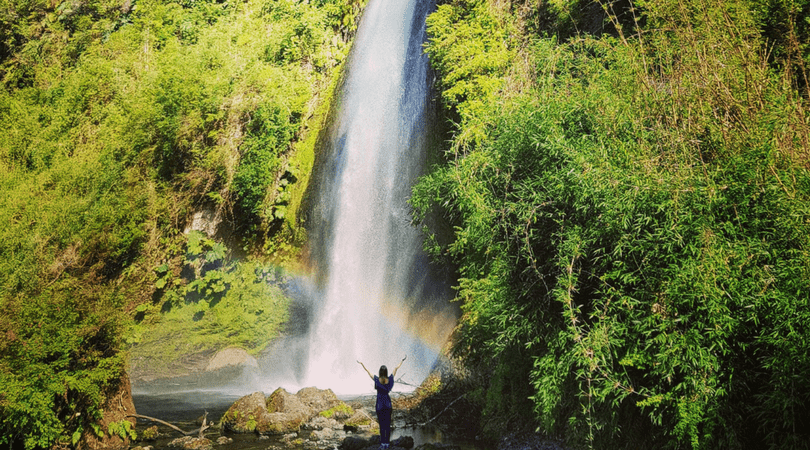
Not only is Chiloé famous for his natural reserves, ecological architecture and beautiful landscapes, its also famous for his gastronomy and culture.
Gastronomy:
It originated from the fusion of dishes and ingredients from Mapuche cuisine with Spanish cuisine and has subsequently received influences from Chilean and Argentine cuisine, to which it has also contributed with various recipes. One of its outstanding features is the extensive use of potatoes as the main ingredient in almost all its dishes, which are prepared grated and mixed with flour or ground potatoes and for each dish there is an ideal variety for its flavor or consistency.
In addition, seafood and fish that inhabit the interior sea and the meat of pigs, lambs and cattle that are raised in the field are used. The varieties of apples, coming from Asturias and Galicia, are small and usually very sweet and sour; They are used to make apple chicha (a special fermentation), empanadas and jams.


 Chiloe religion, myth and identity:
The Chiloé archipelago forms a cultural universe with particular characteristics. The traditional isolation in which Chiloe society developed was an important factor in the preservation of religious and linguistic practices of the Spanish Middle Ages, at the same time that there was an intense miscegenation and exchange between Iberian and indigenous cultural elements. In this sense, the geography and the history of the archipelago during the colonial period and the subsequent incorporation into Chilean territory gave rise to a culture whose traditional customs have their own identity in relation to those of central Chile, the social, political and political nucleus. economic of the country.
One of the most important manifestations of the Chiloe identity is related to popular religiosity. Expression of it are the great annual religious festivities such as the Nazareno festival in Caguach or the Virgen de la Candelaria in Carelmapu. Also the imagery of dressed saints; the unique architecture of its churches, considered since 2000 as a World Heritage Site by Unesco, as well as the organization of the religious community itself, inheritance of the Jesuit evangelization of the seventeenth and eighteenth centuries.

Although it is a deeply Catholic people, the Chilote maintain a complex belief system about the mythical world, whose origin testifies to the multiple exchanges between the dominant Spanish culture and the Huilliche religious universe. Divinities of water and forest that coexist without problems with Catholic religiosity; magic formulas halfway between the medieval imaginary and the Mapuche-Huilliche world; Sorcerers and shamans whose authority was even greater than that of the Chilean State itself, Chiloe mythology is a fascinating and strange world at the same time for continental Chileans. On the one hand, myths that allude to the dark jungle inside the islands, such as Trauco or La Fiura; on the other, the divinities of the omnipresent sea, such as Millalobo or Pincoya. In their mythology there are also mythical monsters such as the Peuchén, the Basilisco or the Camahueto; stories of origin such as the monumental struggle between Tentén Vilú and Caicai Vilú in the early days of the world, and transit myths such as the Caleuche, ship of dead sailors, or the ferryman of Tempilcahue, in charge of crossing the souls of the dead to the other world.
Trauco

Fiura

Pincoya

Creation of the world - Tren Tren and Cai Cai Vilu

Invunche

Caleuche

The best time to visit Archipielago of Chiloe is in late spring, summer, and early fall (November - April). Tourists are recommended to bring clothing for all seasons, as there are days when it can be 35 ° C, and the next day a torrential rain with 20 ° C during the summer period.
To get to Chiloe, you must take a flight from Santiago to Puerto Montt (or you can travel by vehicle) and then board a Ferry to Isla Grande Chiloe.
The trip in total, if the airplane and ferry method is used, can take almost a whole day, so it is recommended to be patient, the distances in Chile are very long and traveling 8-9 hours by vehicle is normal.
You can find hotels and houses from 80-100 USD/person to 10-20 USD/person, depending on the place you go and the comforts you are looking for. It is recommended to rent a vehicle and have a travel route, since you can spend 1 month on the Island and you will not finish knowing all the wonderful places. If you dont speak Spanish, I recommend bringing a dictionary. The islanders dont go to great lengths trying to speak a language other than Chilean Spanish :D
I recommend visiting Chile and the tourist places. Soon I will tell you about all the wonderful places to visit in this long and varied country. Thank you for reading!
ADD CHILOE
 Newspaper from Colombia
 - Social interactions and entertainment - 12 - 03 Jan 21 04:13










 Facebook
 Instagram
 Discord
 Reddit