
King David IV The Builder | Tweet
Published in Georgia  - Social interactions and entertainment - 1 - 08 Feb 21 00:05
Hi all.
Today Georgians are celebrating King David IV`s birthday.
More about King David IV The Builder:
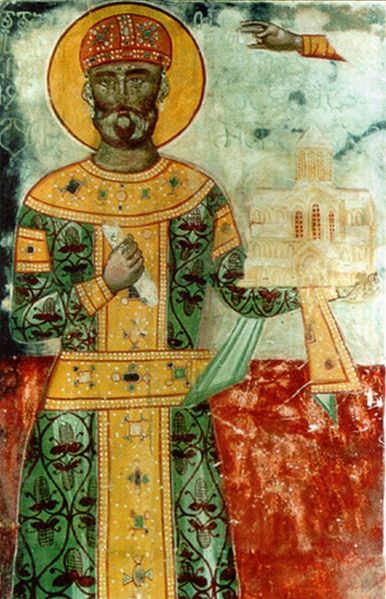
David IV, also known as David the Builder (Georgian: დáƒáƒ•áƒ˜áƒ— áƒáƒ¦áƒ›áƒáƒ¨áƒ”ნებელი, Davit Aghmashenebeli) (1073– 24 January 1125) of the Bagrationi dynasty, was a king of Georgia from 1089 until his death in 1125.Popularly considered to be the greatest and most successful Georgian ruler in history and an original architect of the Georgian Golden Age, he succeeded in driving the Seljuk Turks out of the country, winning the Battle of Didgori in 1121. His reforms of the army and administration enabled him to reunite the country and bring most of the lands of the Caucasus under Georgia’s control. A friend of the church and a notable promoter of Christian culture, he was canonized by the Georgian Orthodox Church.The epithet aghmashenebeli (áƒáƒ¦áƒ›áƒáƒ¨áƒ”ნებელი), which is translated as the Builder (in the sense of built completely), the Rebuilder, or the Restorer,[ first appears as the sobriquet of David in the charter issued in the name of King of Kings Bagrat in 1452 and becomes firmly affixed to him in the works of the 17th- and 18th-century historians such as Parsadan Gorgijanidze, Beri Egnatashvili and Prince Vakhushti. Epigraphic data also provide evidence for the early use of Davids other epithet, the Great (დიდი, didi).Retrospectively, David the Builder has been variously referred to as David II, III, and IV, reflecting substantial variation in the ordinals assigned to the Georgian Bagratids, especially in the early period of their history, owing to the fact that the numbering of successive rulers moves between the many branches of the family. Scholars in Georgia favor David IV, his namesake predecessors being: David I Curopalates (died 881), David II Magistros (died 937), and David III Curopalates (died 1001), all members of the principal line of the Bagratid dynasty.The year of Davids birth can be calculated from the date of his accession to the throne recorded in the Life of King of Kings David (ცხáƒáƒ ებáƒáƒ² მეფეთ-მეფისრდáƒáƒ•áƒ˜áƒ—ისი), written c. 1123–1126,as koronikon (Paschal cycle) 309, that is, 1089, when he was 16 years old. Thus, he would have been born in koronikon 293 or 294, that is, c. 1073. According to the same source, he died in koronikon 345, when he would have been in his 52nd or 53rd year. Professor Cyril Toumanoff gives 1070 and 24 January 1125 as the dates for David. The earliest known document that makes mention of David is the royal charter of his father, George II of Georgia (r. 1072–1089), granted to the Mghvime monastery and dated to 1073.According to the Life of King of Kings David, David was the only son of George II. The contemporaneous Armenian chronicler Matthew of Edessa mentions Davids brother Totorme, who, according to the modern historian Robert W. Thomson, was his sister. The name of Davids mother, Elene , is recorded in a margin note in the Gospel of Matthew from the Tskarostavi monastery; she is otherwise unknown. David bore the name of the biblical king-prophet, from whom the Georgian Bagratids claimed their descent and whose 78th descendant David was proclaimed to be.Davids father, George II, was confronted by a major threat to the kingdom of Georgia. The country was invaded by the Seljuq Turks, which were part of the same wave which had overrun Anatolia, defeating the Byzantine Empire and taking captive the emperor Romanos IV Diogenes at the battle of Manzikert in 1071. In what the medieval Georgian chronicle refers to as didi turkoba, the Great Turkish Invasion, several provinces of Georgia became depopulated and George was forced to sue for peace, becoming a tributary of the sultan Malik-Shah I in 1083 when David was 10. The great noble houses of Georgia, capitalizing on the vacillating character of the king, sought to assert more autonomy for themselves; Tbilisi, the ancient capital of Kartli, remained in the hands of its Muslim rulers, and a local dynasty, for a time suppressed by Georges energetic father Bagrat IV, maintained its precarious independence in the eastern region of Kakheti under the Seljuq suzerainty.
 Â Â Reconstruction of David the Builders personal banner
Following the annexation of Kingdom of Kakheti, in 1105, David routed a Seljuk punitive force at the Battle of Ertsukhi, leading to momentum that helped him to secure the key fortresses of Samshvilde, Rustavi, Gishi, and Lori between 1110 and 1118.Problems began to crop up for David now. His population, having been at war for the better part of twenty years, needed to be allowed to become productive again. Also, his nobles were still making problems for him, along with the city of Tbilisi which still could not be liberated from Seljuk grasp. Again David was forced to solve these problems before he could continue the reclamation of his nation and people. For this purpose, David IV radically reformed his military. He resettled a Kipchak tribe of 40,000 families from the Northern Caucasus in Georgia in 1118–1120. Every Georgian and Kipchak family was obliged to provide one soldier with a horse and weapons. Kipchaks were settled in different regions of Georgia. Some were settled in Inner Kartli province, others were given lands along the border. They were christianized and quickly assimilated into Georgian society.In 1120 David IV moved to western Georgia and, when the Turks began pillaging Georgian lands, he suddenly attacked them. Only an insignificant Seljuk force escaped. King David then entered the neighbouring Shirvan and took the town of Qabala. During that time Shirvanshahs were in position of power shifting between emerging Georgia and Seljuqid states.In the winter of 1120–1121 the Georgian troops successfully attacked the Seljuk settlements on the eastern and southwestern approaches to the Transcaucasus. fresco of King David the Builder, Shio-Mghvime monastery.Muslim powers became increasingly concerned about the rapid rise of a Christian state in southern Caucasia. In 1121, Sultan Mahmud b. Muhammad (1118–1131) declared a holy war on Georgia and rallied a large coalition of Muslim states led by the Artuqid Ilghazi and Toğrul b. Muhammad. The size of the Muslim army is still a matter of debate with numbers ranging from a fantastic 600,000 men (Walter the Chancellor’s Bella Antiochena, Matthew of Edessa) to 400,000 (Smbat Sparapet’s Chronicle) to modern Georgian estimates of 250,000–400,000 men. All sources agree that the Muslim powers gathered an army that was much larger than the Georgian force of 56,000 men. However, on 12 August 1121, King David routed the enemy army on the field of Didgori, achieving what is often considered the greatest military success in Georgian history. The victory at Didgori signaled the emergence of Georgia as a great military power and shifted the regional balance in favor of Georgian cultural and political supremacy.Following his success, David captured Tbilisi, the last Muslim enclave remaining from the Arab occupation, in 1122 and moved the Georgian capital there. A well-educated man, he preached tolerance and acceptance of other religions, abrogated taxes and services for the Muslims and Jews, and protected the Sufis and Muslim scholars. In 1123, David’s army liberated Dmanisi, the last Seljuk stronghold in southern Georgia. In 1124, David finally conquered Shirvan and took the Armenian city of Ani from the Muslim emirs, thus expanding the borders of his kingdom to the Araxes basin. Armenians met him as a liberator providing some auxiliary force for his army. It was then that the important component of Sword of the Messiah appeared in the title of David the Builder. It is engraved on a copper coin of Davids day:
Today Georgians are celebrating King David IV`s birthday.
More about King David IV The Builder:
David IV, also known as David the Builder (Georgian: დáƒáƒ•áƒ˜áƒ— áƒáƒ¦áƒ›áƒáƒ¨áƒ”ნებელი, Davit Aghmashenebeli) (1073– 24 January 1125) of the Bagrationi dynasty, was a king of Georgia from 1089 until his death in 1125.Popularly considered to be the greatest and most successful Georgian ruler in history and an original architect of the Georgian Golden Age, he succeeded in driving the Seljuk Turks out of the country, winning the Battle of Didgori in 1121. His reforms of the army and administration enabled him to reunite the country and bring most of the lands of the Caucasus under Georgia’s control. A friend of the church and a notable promoter of Christian culture, he was canonized by the Georgian Orthodox Church.The epithet aghmashenebeli (áƒáƒ¦áƒ›áƒáƒ¨áƒ”ნებელი), which is translated as the Builder (in the sense of built completely), the Rebuilder, or the Restorer,[ first appears as the sobriquet of David in the charter issued in the name of King of Kings Bagrat in 1452 and becomes firmly affixed to him in the works of the 17th- and 18th-century historians such as Parsadan Gorgijanidze, Beri Egnatashvili and Prince Vakhushti. Epigraphic data also provide evidence for the early use of Davids other epithet, the Great (დიდი, didi).Retrospectively, David the Builder has been variously referred to as David II, III, and IV, reflecting substantial variation in the ordinals assigned to the Georgian Bagratids, especially in the early period of their history, owing to the fact that the numbering of successive rulers moves between the many branches of the family. Scholars in Georgia favor David IV, his namesake predecessors being: David I Curopalates (died 881), David II Magistros (died 937), and David III Curopalates (died 1001), all members of the principal line of the Bagratid dynasty.The year of Davids birth can be calculated from the date of his accession to the throne recorded in the Life of King of Kings David (ცხáƒáƒ ებáƒáƒ² მეფეთ-მეფისრდáƒáƒ•áƒ˜áƒ—ისი), written c. 1123–1126,as koronikon (Paschal cycle) 309, that is, 1089, when he was 16 years old. Thus, he would have been born in koronikon 293 or 294, that is, c. 1073. According to the same source, he died in koronikon 345, when he would have been in his 52nd or 53rd year. Professor Cyril Toumanoff gives 1070 and 24 January 1125 as the dates for David. The earliest known document that makes mention of David is the royal charter of his father, George II of Georgia (r. 1072–1089), granted to the Mghvime monastery and dated to 1073.According to the Life of King of Kings David, David was the only son of George II. The contemporaneous Armenian chronicler Matthew of Edessa mentions Davids brother Totorme, who, according to the modern historian Robert W. Thomson, was his sister. The name of Davids mother, Elene , is recorded in a margin note in the Gospel of Matthew from the Tskarostavi monastery; she is otherwise unknown. David bore the name of the biblical king-prophet, from whom the Georgian Bagratids claimed their descent and whose 78th descendant David was proclaimed to be.Davids father, George II, was confronted by a major threat to the kingdom of Georgia. The country was invaded by the Seljuq Turks, which were part of the same wave which had overrun Anatolia, defeating the Byzantine Empire and taking captive the emperor Romanos IV Diogenes at the battle of Manzikert in 1071. In what the medieval Georgian chronicle refers to as didi turkoba, the Great Turkish Invasion, several provinces of Georgia became depopulated and George was forced to sue for peace, becoming a tributary of the sultan Malik-Shah I in 1083 when David was 10. The great noble houses of Georgia, capitalizing on the vacillating character of the king, sought to assert more autonomy for themselves; Tbilisi, the ancient capital of Kartli, remained in the hands of its Muslim rulers, and a local dynasty, for a time suppressed by Georges energetic father Bagrat IV, maintained its precarious independence in the eastern region of Kakheti under the Seljuq suzerainty.
  Reconstruction of David the Builders personal bannerFollowing the annexation of Kingdom of Kakheti, in 1105, David routed a Seljuk punitive force at the Battle of Ertsukhi, leading to momentum that helped him to secure the key fortresses of Samshvilde, Rustavi, Gishi, and Lori between 1110 and 1118.Problems began to crop up for David now. His population, having been at war for the better part of twenty years, needed to be allowed to become productive again. Also, his nobles were still making problems for him, along with the city of Tbilisi which still could not be liberated from Seljuk grasp. Again David was forced to solve these problems before he could continue the reclamation of his nation and people. For this purpose, David IV radically reformed his military. He resettled a Kipchak tribe of 40,000 families from the Northern Caucasus in Georgia in 1118–1120. Every Georgian and Kipchak family was obliged to provide one soldier with a horse and weapons. Kipchaks were settled in different regions of Georgia. Some were settled in Inner Kartli province, others were given lands along the border. They were christianized and quickly assimilated into Georgian society.In 1120 David IV moved to western Georgia and, when the Turks began pillaging Georgian lands, he suddenly attacked them. Only an insignificant Seljuk force escaped. King David then entered the neighbouring Shirvan and took the town of Qabala. During that time Shirvanshahs were in position of power shifting between emerging Georgia and Seljuqid states.In the winter of 1120–1121 the Georgian troops successfully attacked the Seljuk settlements on the eastern and southwestern approaches to the Transcaucasus.
 fresco of King David the Builder, Shio-Mghvime monastery.Muslim powers became increasingly concerned about the rapid rise of a Christian state in southern Caucasia. In 1121, Sultan Mahmud b. Muhammad (1118–1131) declared a holy war on Georgia and rallied a large coalition of Muslim states led by the Artuqid Ilghazi and Toğrul b. Muhammad. The size of the Muslim army is still a matter of debate with numbers ranging from a fantastic 600,000 men (Walter the Chancellor’s Bella Antiochena, Matthew of Edessa) to 400,000 (Smbat Sparapet’s Chronicle) to modern Georgian estimates of 250,000–400,000 men. All sources agree that the Muslim powers gathered an army that was much larger than the Georgian force of 56,000 men. However, on 12 August 1121, King David routed the enemy army on the field of Didgori, achieving what is often considered the greatest military success in Georgian history. The victory at Didgori signaled the emergence of Georgia as a great military power and shifted the regional balance in favor of Georgian cultural and political supremacy.Following his success, David captured Tbilisi, the last Muslim enclave remaining from the Arab occupation, in 1122 and moved the Georgian capital there. A well-educated man, he preached tolerance and acceptance of other religions, abrogated taxes and services for the Muslims and Jews, and protected the Sufis and Muslim scholars. In 1123, David’s army liberated Dmanisi, the last Seljuk stronghold in southern Georgia. In 1124, David finally conquered Shirvan and took the Armenian city of Ani from the Muslim emirs, thus expanding the borders of his kingdom to the Araxes basin. Armenians met him as a liberator providing some auxiliary force for his army. It was then that the important component of Sword of the Messiah appeared in the title of David the Builder. It is engraved on a copper coin of Davids day:
King of Kings, David, son of George, Sword of the Messiah.Humane treatment of the Muslim population, as well as the representatives of other religions and cultures, set a standard for tolerance in his multiethnic kingdom. It was a hallmark not only for his enlightened reign, but for all of Georgian history and culture.After Georgias decisive victory at the battle of Didgori, Shirvanshah Manuchir, who was under the influence of his wife, Georgian princess Tamar, maintained a pro-Georgian orientation and rejected paying tribute to the Seljuqids. Deprived of the tribute, 40,000 dinars, the Seljuqid Sultan Mahmud directed to Shirvan at the beginning of 1123, captured Shamakhi and took Shah as hostage contrary to Manuchehrs betrayal. In the response to this, in June 1123 David IV attacked and defeated Sultan again and finally conquered Shirvan by capturing the cities and fortresses of Shamakhi, Bughurd, Gulustan, Shabran.David the Builder died on 24 January 1125, and upon his death, as he had specified, was buried under the stone inside the main gatehouse of the Gelati Monastery so that anyone coming to his beloved Gelati Academy stepped on his tomb first. He was survived by three children, his eldest son Demetrius, who succeeded him and continued his fathers victorious reign; and two daughters, Tamar, who was married to the Shirvan Shah Manuchihr III, and Kata (Katai), married to Isaac Comnenus, the son of the Byzantine Emperor Alexius I Comnenus. Beside his political and military skills, King David earned fame as a writer, composing Galobani sinanulisani (Hymns of Repentance, c. 1120), a powerful work of emotional free-verse psalms, which reveal the king’s humility and religious zeal.Best regards. Please vote and sub.......
  Autograph of David IV.
მე დáƒáƒ•áƒ˜áƒ— უნáƒáƒ ჩევესმáƒáƒœ მáƒáƒœáƒáƒ›áƒáƒœ ჴელითრმáƒáƒœáƒ˜áƒ—რქრისტესთრმáƒáƒœ გáƒáƒ•áƒ’ზáƒáƒ•áƒœáƒ” წიგნი ესე მთáƒáƒ¡ წმიდáƒáƒ¡ სინáƒáƒ¡ ვინც მáƒáƒ˜áƒ®áƒ›áƒáƒ ებდეთ ლáƒáƒªáƒ•áƒ ყáƒáƒ•áƒ— ჩემთვინ
I David the servant of Jesus sent this book to Holy Mount Sinai and who uses it pray for me
Document from Saint Catherines Monastery, 12th century.
   Expansion of Kingdom of Georgia under David IVs reign.
Support
The Black SwordsmanThe Black SwordsmanThe Black SwordsmanF35RaptorCalvin CandieLUCIF3RLUCIF3RFolkmanlHadeslGEORGIANKonstantin VelikiAravchamotPuriJbalv1nJbalv1nThomas CrownComments (1)

 Facebook
 Instagram
 Discord
 Reddit