Musical Instruments (my first article) |
Published in Albania  - Social interactions and entertainment - 8 - 22 Feb 21 10:24
AÂ
musical instrument is a device created or adapted to make
musical sounds. In principle, any object that produces sound can be considered a musical instrument. A person who plays a musical instrument is known as anÂ
instrumentalist. The history of musical instruments dates to the beginnings of human culture. Early musical instruments may have been used for ritual, such as a
horn to signal success on the hunt, or a drum in a religious ceremony. Cultures eventually developed composition and performance of melodies for entertainment. Musical instruments evolved in step with changing applications and technologies.
Today I will be talking about my favourite instrument - The Violin (hence my newspaper name)Â
Most violins have a hollow wooden body. It is the smallest and thus highest-pitched instrument in the family in regular use.
 The violin typically has four strings, usually tuned in perfect fifths with notes G3, D4, A4, E5, and is most commonly played by drawing a bow across its strings.Â
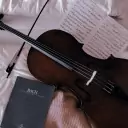
As it is shown in the image below:

EveryÂ
violin has small differences from other instruments thatÂ
make itÂ
unique.Â
There is also the vocal quality, this is the voice of the instrument and how it sounds like a human voice. A human choral tone is often desirable as it feels more human and capable of conveying emotion and feeling.
The violin is both an object of great beauty and symmetry as well as an ingenious work of mechanical design.  Unlike a cello or bass, a violin does not touch the floor.Â
20 Key Components of a Violin and How They Work
Â
Scroll. The decorative top of the violin. It’s most often carved in the shape of a scroll but is sometimes carved in another shape, such as a person’s head.Pegs. Four wooden pegs around which the strings are wound. They are used to tune the instrument’s strings. Tightening a string raises its pitch; loosening a string lowers its pitch.Peg box. The enclosure in which the strings are wound onto the pegs.Nut. A small piece of wood between the pegbox and fingerboard. It has four notches, one for each string to emerge over the fingerboard.Neck. The part of the violin between the body of the violin and the pegbox and scroll.Fingerboard. The surface where the fingers press down on the strings. It’s generally made of ebony.Top. The front of the violin. In most violins, the top is made from spruce wood and the back is made from maple wood.Ribs. The thin strips of wood that wind around the sides of the violin, connecting the top and the back to form the soundbox of the violin.Strings. A violin has four strings tuned in intervals of fifths. From lowest to highest (left to right) they are G, D, A, and E. The strings are made from a variety of materials, including steel, synthetic materials and/or animal gut. They are strung over the fingerboard, from the pegs to the tailpiece.Purfling. A thin strip of three-ply wood inlaid in a channel around the edge of the violin to protect the instrument from damage. It may look like an outline drawn around the edge of the violin, but its purpose is actually more protective than decorative.Corner blocks. Wooden blocks inside the violin that stabilize the construction of the instrument.F-holes. The two holes from which sound emerges from the violin. They are shaped like cursive fs.These, combined with the violin’s hollow build, promote resonance.Bridge. A decorative but functional piece of maple wood that balances underneath the strings and transmits vibrations from the strings into the body of the instrument to create sound. The bridge of the violin is not glued on, it is held in place by tension. The force that the strings exert on the bridge is equal to about 90 pounds.Soundpost. A wooden post located inside the violin, under the right side of the bridge. It is crucial for transmitting vibrations of the strings into the body of the violin to create sound, and its placement can change the quality of that sound, in terms of volume and/or tone quality.Fine tuner(s). Small tuners located on the tailpiece. They tune the violin but in smaller increments than the pegs do. Smaller violins often have fine tuners for all strings, but full-size violins tend to have them only for the E string.Tailpiece. The somewhat triangular piece of wood where the strings are attached on the lower end of the violin.Tailpiece gut. The cord that attaches the tailpiece to the violin.Chin rest. A shaped piece of wood or plastic on which you rest your chin and jawbone. It’s attached near the tailpiece.Saddle. A block on the inside of the violin that helps support the tailgut and the tension of the strings.Pickup. Found on an electric violin, a pickup converts the violin’s acoustic vibrations into an electrical signal, which is then sent to an amplifier (much like is done with an electric guitar, an electric bass, or an electronic keyboard).
And lastly, a few more pictures.


Support
QendresaQendresaQendresaQendresaDardanMDardanMDardanMDardanMIzN0GooDK A T A N AKRIMIKOAlbRevolutionAlbRevolutionAlbRevolutionAlbRevolutionAlbRevolutionAlbRevolutionGaladraelGrandpaGrandpaDiabloDiabloDiabloDiabloDiabloDiabloDiabloDiabloDiabloDiabloDiabloDiabloDiabloDiabloDiabloKonstantin Veliki
Comments (8)
22 Feb 21 10:27
K A T A N AEhhh violina, violinaa, e preferuara e Zogut...🤪🎼
22 Feb 21 10:33
KRIMIKOA table, a chair, a bowl of fruit and a violin; what else does a man need to be happy.
Albert Einstein!
30 Aug 21 15:54
MerlinaVeolines : D
 Newspaper from North Macedonia








 Facebook
 Instagram
 Discord
 Reddit