Tres curiosas formaciones militares. Three curious military formations. |
Published in Colombia  - Social interactions and entertainment - 6 - 14 Apr 21 05:26
La historia mundial conoce muchas formaciones militares inusuales que destacaban por sus funciones, sus integrantes o sus técnicas de combate.
World history knows many unusual military formations that stood out for their functions, their members or their combat techniques.
Los gigantes de Potsdam. The giants of Potsdam.

Los gigantes de Potsdam fueron un cuerpo del Ejército del segundo rey de Prusia, Federico Guillermo, creado a principios del siglo XVIII.
Los soldados de esta unidad de élite debÃan medir por lo menos 1,88 metros, por lo cual agentes especiales del rey se encargaban de buscar a voluntarios por toda Europa, reclutándolos a cualquier precio, desde altas sumas de dinero hasta el secuestro, según el portal de noticias ruso Rustoria.ru.
El rey, obsesionado con sus gigantes, incluso los obligaba a casarse con las mujeres más altas del paÃs para garantizar una futura generación de soldados para su unidad, que, de hecho, nunca llegó a entrar en combate.
Después de la muerte de Federico Guillermo, su heredero Federico el Grande disolvió el regimiento, ahorrando de esta manera una suma que alcanzaba para crear cuatro unidades convencionales.
The Potsdam Giants were an army corps of the second king of Prussia, Frederick William, created in the early 18th century.The soldiers of this elite unit had to be at least 1.88 meters tall, so special agents of the king were in charge of looking for volunteers all over Europe, recruiting them at any price, from high sums of money to kidnapping, according to the Russian news portal Rustoria.ru.The king, obsessed with his giants, even forced them to marry the tallest women in the country to ensure a future generation of soldiers for his unit, which, in fact, never saw combat.After the death of Frederick William, his heir Frederick the Great disbanded the regiment, thus saving a sum sufficient to create four conventional units.
El Batallón Sagrado de Tebas. The Sacred Battalion of Thebes.
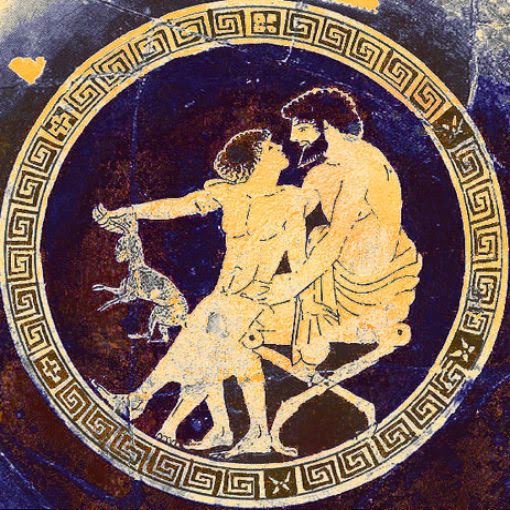

Era una unidad de élite griega formada por 150 parejas de amantes, todos masculinos. Según Plutarco, fue creado por el comandante tebano Górgidas. Las parejas consistÃan en un miembro de mayor edad o ´´heniochoi´´ (conductor) y uno más joven o ´´paraibatai´´ (compañero). La motivación para el uso del ´´ejército de amantes´´ en batalla lo expresa Plutarco: “Para hombres de la misma tribu o familia hay poco valor de uno por otro cuando el peligro presiona pero un batallón cimentado por la amistad basada en el amor nunca se romperá y es invencible ya que los amantes, avergonzados de no ser dignos ante la vista de sus amados y los amados ante la vista de sus amantes, deseosos se arrojan al peligro para el alivio de unos y otros.´´
It was an elite Greek unit formed by 150 pairs of lovers, all male. According to Plutarch, it was created by the Theban commander Gorgidas. The couples consisted of an older member or heniochoi (driver) and a younger one or paraibatai (companion). The motivation for the use of the army of lovers in battle is expressed by Plutarch: For men of the same tribe or family there is little courage for one another when danger presses but a battalion cemented by friendship based on love will never break and is invincible since the lovers, ashamed of being unworthy at the sight of their beloved and the beloved at the sight of their lovers, willingly throw themselves into danger for the relief of one another.
El ejército fantasma. The phantom army.


En 1944 el Ejército estadounidense reclutó a un grupo de artistas, diseñadores, ingenieros y expertos en efectos de sonido para fundar la 23.º CompañÃa de Tropas Especiales, una unidad cuyo objetivo principal era engañar al enemigo haciéndole creer que las tropas de EE.UU. eran mucho más fuertes y numerosas de lo que eran realmente.
Para este fin, empleaban diferentes técnicas, tales como piezas de artillerÃa inflables, grabaciones del sonido de tanques o la difusión de información falsa para posibles espÃas. La existencia de esta unidad, que participó en más de 20 operaciones y salvó miles de vidas, no fue revelada por EE.UU. hasta pasados 50 años.
In 1944 the U.S. Army recruited a group of artists, designers, engineers and sound effects experts to found the 23rd Special Troops Company, a unit whose main objective was to deceive the enemy into believing that U.S. troops were much stronger and more numerous than they really were.To this end, they employed different techniques, such as inflatable artillery pieces, sound recordings of tanks or the dissemination of false information to potential spies. The existence of this unit, which participated in more than 20 operations and saved thousands of lives, was not revealed by the US until 50 years later.
Support
AlbLionAlbLionAlbLionAlbLion
Comments (6)
14 Apr 21 06:06
FZoleev14 thanks https://www.edominations.com/en/article/21749
16 Apr 21 08:20
pjs84https://www.edominations.com/es/article/22366





 Facebook
 Instagram
 Discord
 Reddit