Published in Chile - Social interactions and entertainment - 5 - 21 May 21 12:00
When boarding, boys was the last thing that the Commander of the Esmeralda, Frigate Captain Arturo Prat, said when he jumped on the deck of the enemy ship, the monitor Huáscar. A feat that, added to those that occurred throughout the morning of the combat in Iquique, remained in the memory of the Chileans and that some face-to-face journalists stamped in their chronicles as the faithful testimony of the naval glories and that since May 21 from 1879 year to year is commemorated.
In the port of Iquique a chronicler of the Peruvian newspaper El Comercio de Iquique published an article the day after the outcome of the blockade that the Chileans maintained through the armored Blanco and the corvettes Chacabuco and OHiggins. so that the Peruvian squad would appear in the place and thus dispute the dominion of the sea. That journalist not only praised Commander Prats sacrifice, but also pointed out that this fact infected Chileans with patriotism and reinforced the win or die rule initiated by Lord Cochrane. After the catastrophe, when he extinguished the shouts of enthusiasm with which the shots from Huáscar were greeted from the beginning by the people and the army, the stupor and silence of all followed.
Nothing made us think that the decision of Admiral Juan Williams Rebolledo, who changed his strategy in order to harass the Peruvian ports, keeping the older ships, the corvette Esmeralda, the schooner Covadonga and the transport Lamar in the port of Iquique, continuing with the blockade, which from that moment would be commanded by Commander Prat, would be a decision that would not only change the life of Arturo Prat and his family, but would also make a decisive turn in the history of Chile.
While the Chilean ships Blanco, Chacabuco and OHiggins set sail for Callao, the Peruvian ships did so for Arica, without both squadrons noticing each other. Upon arriving at the port of Arica, the Peruvian ships realized that the three Chilean ships were alone in the port of Iquique, so the monitor Huáscar and the armored frigate Independencia went to meet the Chilean ships.
In the roadstead of Iquique, five ships with whose initials the word CHILE was formed: Covadonga, Huáscar, Independencia, Lamar and Esmeralda. In the distance, the national crew, who remained in the ships, sighted enemy ships carrying the combat flag. This gave the alert for everyone to occupy their jobs to face an enemy force that was superior to the Chilean one. Commander Prat strapped his sword around his belt and went up on deck, ordering accountant Oscar Goñi to throw a sack of correspondence into the sea to prevent it from falling into enemy hands. He ordered to hoist the signals reinforce the loads, come to speak and follow my waters, then he encouraged his crew, made the Esmeralda turn towards land and gave the order to break the fire and to the attack what was celebrated with cheers to Chile.
While the combat was going on, the chronicler of El Comercio de Iquique wrote in detail the events that were taking place: when both ships spoke, Commander Grau announced the surrender to the Esmeralda , but the Chilean corvette chief refused to lower his flag.
The Esmeralda faced the monitor Huáscar in what is known as the Iquique Naval Combat, while the Covadonga headed south to face the Independence in the combat called Punta Gruesa. Thus the conflict was divided in two.
The Combat of Iquique was the beginning of a great victory, because it was there that the different Chilean troops fed their forces for future battles. This spirit accompanied the Army when it took the Morro de Arica in only 55 minutes and encouraged them in the battles of Chorrillos and Miraflores, which is why, according to the publication of the anonymous journalist, the War of the Pacific was won in Iquique.
Commander Prat, facing such a great enemy, decided to direct the Esmeralda as close to land, a position that made it difficult for the Huáscar to aim for high and well-directed shots to avoid the deaths of civilians who were stationed in the beach to witness the outcome of the confrontation, while shouting Long live Peru!
As the Esmeralda was near the beach, the Peruvian General Juan BuendÃa placed four cannons in the sand with which he fired at the Chilean ship, while on the other side they fired at him from the Huáscar, which progressively began to approach until it established a distance of 600 meters. As a result of the cannon fire, the Chilean ship suffered serious damage and numerous deaths.
In parallel, but further south, a second confrontation was fought between the Covadonga under the command of Lieutenant Commander, Carlos Condell, and the frigate Independencia under the command of Captain Juan Guillermo Moore.
It was very difficult for the Chilean ship to respond to the attacks of the enemy ship, since in order to use its artillery it had to maneuver with the ship, which shortened the distance between it and Independencia, then the Chilean schooner to avoid being spurred by the Enemy ship sailed close to shore until it reached Punta Gruesa, where the waters were shallow. Thus, the Covadonga fell to starboard to countermarch, while the Independence increased her speed to gain momentum and ground violently, leaving her keel completely shattered. Then Commander Condell fired six shots at Independencia forcing it to lower its flag and call for boats.
At the end of this confrontation, Commander Condell, went to where Commander Prat was in order to support him, however, upon reaching the place he saw that the Corberta was sinking into the sea, while Commander Grau was going quiet the Covadonga to attack it, but upon witnessing the disaster that had remained with his squad in Punta Gruesa, he gave up the maneuver and went to the aid of his crew.
The last minutes of the Esmeralda were a reflection of the courage and union of the crew under the command of Commander Prat, who, having the opportunity to jump into the enemy ship, did not doubt, even though that action meant his death. For their part, the rest of the crew, seeing the decision of their Commander, also fought to the end.
Boys: the contest is unequal, but courage and courage. I assure you, that while I live, that flag will fly in its place and if I die, my officers will know how to do their duty.
In honor of all who gave their lives for our nation and the shaping of our history. May the fight with Peru only remain in a video game, since our history reminds us how tragic this war was for both nations.
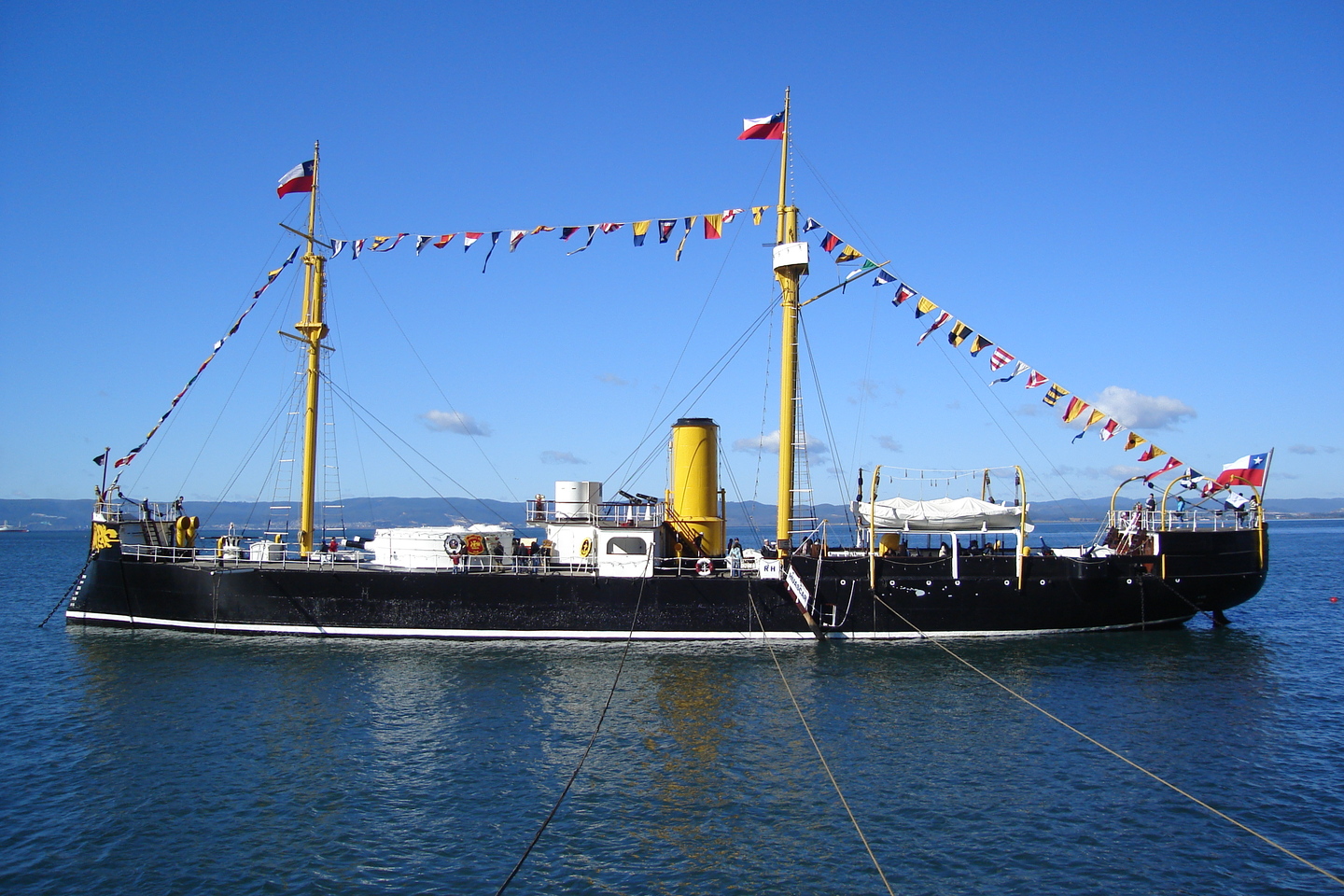
Last picture is the first Perúvian monitor huascar then captured by Chile active until 1896 at service of the Chilean Navy , a living machine of our history and of the peruvians , since then chile have been taking care of the ship or and is the second oldest ships that fought in battle and is still floating on the world
So proud of my country and our neighbors also big respect for leaving it all in the battles 🇨🇱â¤ï¸ðŸ‡µðŸ‡ª
All in the past , Perú and Chile are mean to be brothers now.

 Newspaper from Colombia
 - Social interactions and entertainment - 5 - 21 May 21 12:00



 Facebook
 Instagram
 Discord
 Reddit