Published in Chile - Social interactions and entertainment - 5 - 08 Mar 22 00:01
A Molotov cocktail, also known as a petrol bomb, gasoline bomb, bottle bomb, poor mans grenade, fire bomb (not to be confused with an actual fire bom😎, fire bottle or just Molotov, sometimes shortened as Molly, is a improvised incendiary weapon. It is made by filling a glass bottle with flammable substances. In use, a fuse attached to the bottle is lit and the bottle is thrown, shattering on impact and spreading its burning contents.
Because of the relative ease of production, Molotov cocktails have been used by criminals, rioters, football hooligans, urban guerrillas, terrorists, irregular soldiers, or even regular soldiers short on equivalent military-issue weapons.
The name Molotov cocktail was coined by the Finns during the Winter War, called Molotovin koktaili in Finnish. The name was a pejorative reference to Soviet foreign minister Vyacheslav Molotov, who was one of the architects of the Molotov–Ribbentrop Pact signed in late August 1939.
The names origin came from the propaganda Molotov produced during the Winter War, mainly his declaration on Soviet state radio that bombing missions over Finland were actually airborne humanitarian food deliveries for their starving neighbours. As a result, the Finns sarcastically dubbed the Soviet cluster bombs Molotov bread baskets ( a Soviet-made droppable bomb dispenser that combined a large high-explosive charge with a cluster of incendiary bombs. It was used against the cities of Finland during the Winter War of 1939–1940. The bomb consisted of a cylinder 2.25 metres (7.4 ft) long and 0.9 metres (3.0 ft) in diameter) in reference to Molotovs propaganda broadcasts.When the hand-held bottle firebomb was developed to attack and destroy Soviet tanks, the Finns called it the Molotov cocktail, as a drink to go with his food parcels.
Molotov bread basket
A Molotov cocktail is a breakable glass bottle containing a flammable substance such as petrol, alcohol, or a napalm-like mixture, with some motor oil added, and usually a source of ignition such as a burning cloth wick held in place by the bottles stopper. The wick is usually soaked in alcohol or kerosene, rather than petrol.
In action, the wick is lit and the bottle hurled at a target such as a vehicle or fortification. When the bottle smashes on impact, the ensuing cloud of fuel droplets and vapour is ignited by the attached wick, causing an immediate fireball followed by spreading flames as the remainder of the fuel is consumed.
Other flammable liquids, such as diesel fuel, methanol, turpentine, jet fuel, and isopropyl alcohol, have been used in place of, or combined with, petrol. Thickening agents, such as solvents, extruded polystyrene (XPS) foam (known colloquially as styrofoam), baking soda, petroleum jelly, tar, strips of tyre tubing, nitrocellulose, motor oil, rubber cement, detergent and dish soap, have been added to promote adhesion of the burning liquid and to create clouds of thick, choking smoke.
The contents of the bottle may be pressurized to create a stronger explosion, potentially dispersing the broken glass as shrapnel. This is usually done by closing the bottle with an airtight closure and heating it before attaching the cloth wick.
In addition, highly toxic substances are also known to be added to the fuel to create a suffocating or poisonous smoke on the resulting explosion, effectively turning the Molotov cocktail into a makeshift chemical weapon. These include bleach, chlorine, hydrogen cyanide, various strong acids, and pesticides.
Non-incendiary variants During the protests in Venezuela from 2014 and into 2017, protesters had been using Molotov cocktails similar to those used by demonstrators in other countries. As the 2017 Venezuelan protests intensified, demonstrators began using Puputovs, a play on words of Molotov, with glass devices filled with excrement being thrown at authorities after the PSUV ruling-party official, Jacqueline FarÃa, mocked protesters who had to crawl through sewage in Caracas Guaire River to avoid tear gas.
On 8 May, the hashtag #puputov became the top trend on Twitter in Venezuela as reports of authorities vomiting after being drenched in excrement began to circulate. A month later on 4 June 2017 during protests against Donald Trump in Portland, Oregon, protesters began throwing balloons filled with unknown, foul-smelling liquid at officers.

 Newspaper from Colombia
 - Social interactions and entertainment - 5 - 08 Mar 22 00:01

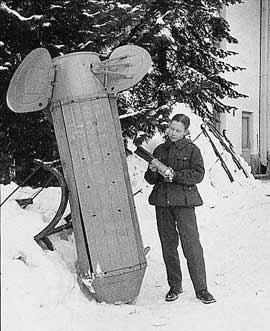 Molotov bread basket





 Facebook
 Instagram
 Discord
 Reddit