Published in Chile - Social interactions and entertainment - 4 - 21 Mar 22 00:00
A waterfall is a point in a river or stream where water flows over a vertical drop or a series of steep drops. Waterfalls also occur where meltwater drops over the edge of a tabular iceberg or ice shelf.
Waterfalls can be formed in several ways, but the most common method of formation is that a river courses over a top layer of resistant bedrock before falling on to softer rock, which erodes faster, leading to an increasingly high fall. Waterfalls have been studied for their impact on species living in and around them.
Waterfalls are commonly formed in the upper course of a river where lakes flow into valleys in steep mountains.
A river sometimes flows over a large step in the rocks that may have been formed by a fault line. Waterfalls can occur along the edge of a glacial trough, where a stream or river flowing into a glacier continues to flow into a valley after the glacier has receded or melted. The large waterfalls in Yosemite Valley are examples of this phenomenon, which is referred to as a hanging valley. Another reason hanging valleys may form is where two rivers join and one is flowing faster than the other.
When warm and cold water meet by a gorge in the ocean, large underwater waterfalls can form as the cold water rushes to the bottom.
Types of Waterfalls
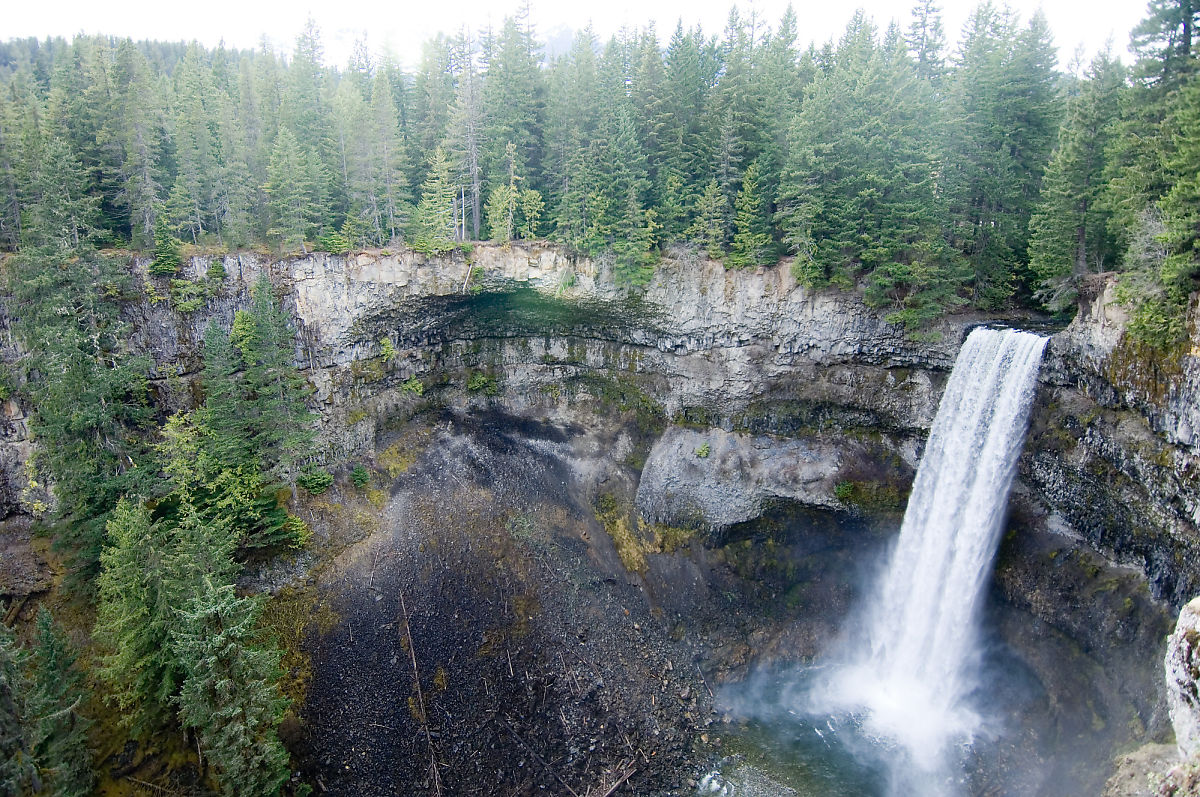
Ledge waterfall Water descends vertically over a vertical cliff, maintaining partial contact with the bedrock. May be several types:
Block/Sheet: Water descends from a relatively wide stream or river.
Classical: Ledge waterfalls where fall height is nearly equal to stream width, forming a vertical square shape.
Curtain: Ledge waterfalls which descend over a height larger than the width of falling water stream.
Plunge
Fast-moving water descends vertically, losing complete contact with the bedrock surface.
Punchbowl Water descends in a constricted form and then spreads out in a wider pool. Horsetail
Descending water maintains contact with bedrock most of the time. Several types:
Chute: A large quantity of water forced through a narrow, vertical passage.
Fan: Water spreads horizontally as it descends while remaining in contact with bedrock. Cascade
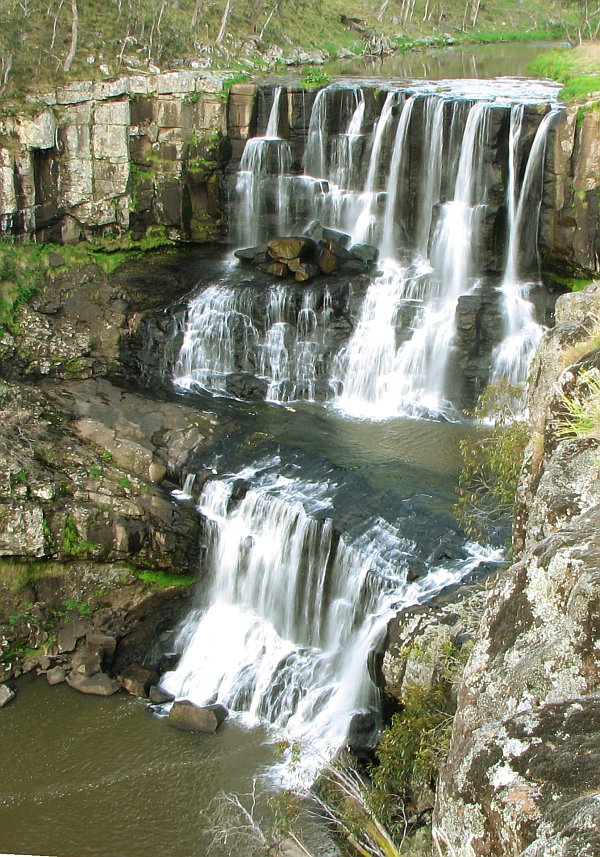
Water descends a series of rock steps.
Tiered/Multi-step/Staircase A series of waterfalls one after another of roughly the same size each with its own sunken plunge pool
Cataract
A large, powerful waterfall.
Segmented
Distinct flows of water form as it descends.

 Newspaper from Argentina
 - Social interactions and entertainment - 4 - 21 Mar 22 00:00






 Facebook
 Instagram
 Discord
 Reddit