Mysterious and strange artifacts from our past! |
Published in Georgia  - Social interactions and entertainment - 5 - 19 Aug 22 00:01
 The Antikythera MechanismDiscovered in an undersea shipwreck in 1902, the Antikythera Mechanism is truly a one-of-a-kind discovery. Dismissed by scholars initially, it is only since the 1970s that technology has allowed archaeologists to appreciate the mechanism. Using precise clockwork technology, the Antikythera Mechanism tracked the cycles of several planets and stars, offering precise astronomical and chronological details–very useful for navigation, but far beyond anything we were aware that the Greeks were capable of.
 Roman DodecahedronsThese strange items have been found scattered across the Roman empire and central Europe. They are hollow, with holes on each side and round knobs at every corner, and come in various sizes. The sheer number of them, and their widespread use, suggests that they were mass-produced, and possibly used by people who travelled a lot. But just what were they for?
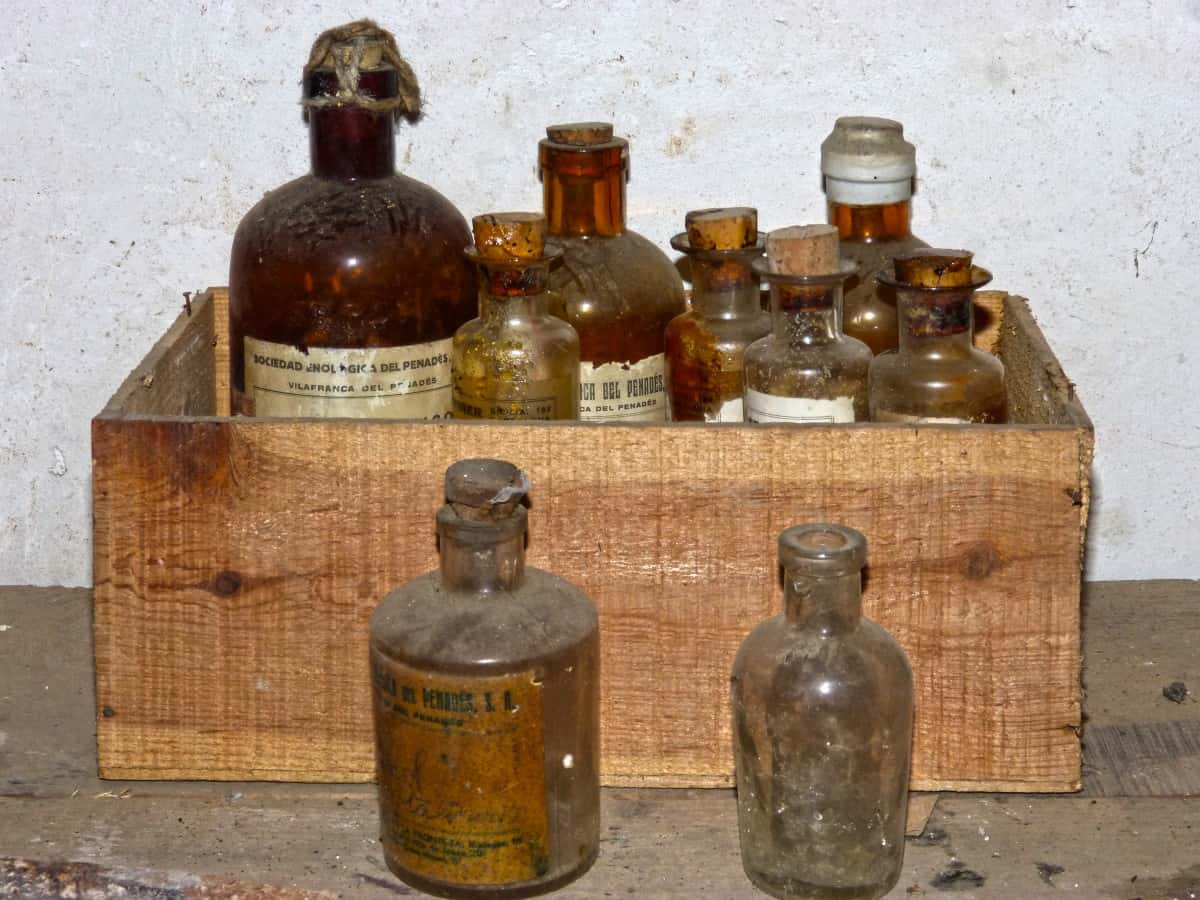 Witch BottlesIn the 17th century, few things worried the English people more than witches. Witches bore the brunt of the blame for everything from poor crops to ill health. And so they would combat witches through magic of their own. The only way to prevent yourself from suffering at the hands of a witch was the Witch Bottle: a small clay bottled filled with nails, hair, fingernails, and urine, and buried near the witch’s home. Archaeologists have since found several of these bottles all over England, and even a few in the United States.
 Ubaid LizardmenFor almost one hundred years now, archaeologists at a site just west of Ur in southern Iraq have been uncovering mysterious 7,000-year-old statues of men, women, and women holding babies, all with a strange mixture of human and reptile characteristics. While many gods of Mesopotamia had hybrid human and animal characteristics, there’s nothing to suggest these statues, which have long snouts and almond-shaped eyes, were ritualistic figurines.
 The Voynich ManuFor years, scholars have puzzled over the Voynich Manu, a 15th century manu written in an unbreakable code and filled with mysterious drawings of plants. Researchers are still trying to piece together the code, and they have no idea who the writer (or writers) was, or what led them to make such a book.
 The Sanxingdui CarvingsVery little is known about China’s ancient Sanxingdui culture, and their impact on China’s artistic evolution was largely unrecognized until 1986, when archaeologists found hoard of figures, carvings, and bells. The sculptures were cast in jade and ceramic, as well as some very advanced bronze, with an aesthetic that calls to mind the art of the Aztecs. Mysteriously, many of the ceramic figures found at the site had been deliberately smashed or defaced.
 The Ulfbehrt SwordThey’re like something out of Game of Thrones: a set of mysterious, and mysteriously strong, Viking swords, inscribed with the word ULFBEHRT. With over 170 of the swords in existence, and dating over a span of 200 years, it seems likely that ULFBEHRT was a brand rather than a single maker. But what is most surprising is the quality of the metal: whoever ULFBEHRT was, he (or they) knew how to make “crucible†steel, so pure it wouldn’t be replicated again until the Industrial Revolution.
 The Maine PennyIn 1957, a guy–Guy Mellgren, in fact–found an unusual object near Blue Hill, Maine: a Viking coin. The coin itself is not so unusual: the Smithsonian Institute confirms it is a real Viking coin, going so far as to call it “the only pre-Columbian Norse artifact ever found in the United States.†And there lies the mystery. There is no definitive evidence that the Vikings ever travelled further southwest than Newfoundland. Could the coin been passed, hand to hand, by First Nations and Native American traders? That seems the only reasonable possibility: there were 30,000 Native American artifacts found at the Blue Hill site, but only one Viking penny.
 A Sri Lankan MeteoriteWhen a meteor struck Sri Lanka in 2012, scientists discovered something unusual about it. Embedded in the rock were fossilized forms of algae. Scientists have recently hypothesized that life on earth was first carried here on just such a meteorite. Debate over the exact origin of the algae continues, but the Sri Lankan Meteorite could be one more step toward proving life exists beyond our world.
 
Support
spageretroTurcoGaladraelFighter 007Sten HavenSten HavenDCLXVlartis1904artis1904
Comments (5)
19 Aug 22 07:40
TBPTKOЋирилица, рођаци ;)

 Newspaper from Albania


 Facebook
 Instagram
 Discord
 Reddit