Las Meninas (The Ladies-in-waiting) |
Published in Turkey  - Social interactions and entertainment - 0 - 21 Jul 23 00:02
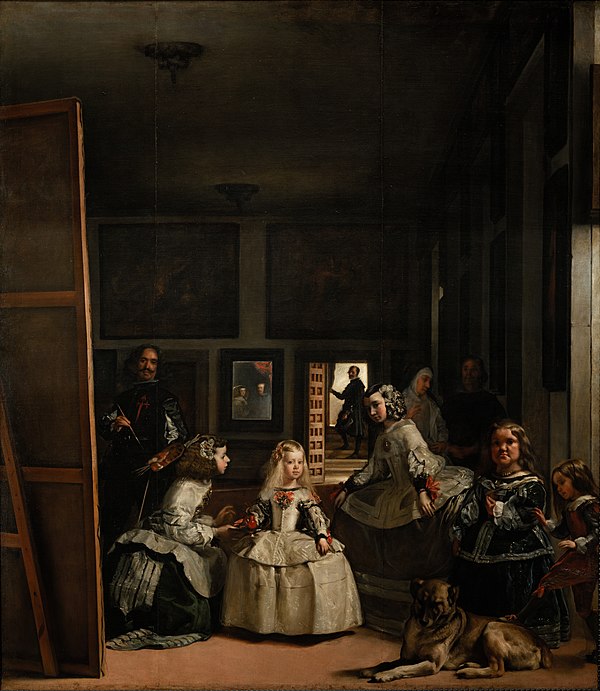 Las Meninas
 (
Spanish for
The Ladies-in-waiting pronouncedÂ
) is a 1656 painting in theÂ
Museo del Prado inÂ
Madrid, byÂ
Diego Velázquez, the leading artist of theÂ
Spanish Golden Age. It has become one of the most widely analyzed works inÂ
Western painting, due to the way its complex and enigmatic composition raises questions about reality and illusion, and the uncertain relationship it creates between the viewer and the figures depicted.
The painting is believed byÂ
F. J. Sánchez Cantón to depict a room in theÂ
Royal Alcazar of Madrid during the reign of KingÂ
Philip IV of Spain, and presents several figures, most identifiable from the Spanish court, captured in a particular moment as if in aÂ
snapshot. Â Some of the figures look out of the canvas towards the viewer, while others interact among themselves. The five-year-oldÂ
Infanta Margaret Theresa is surrounded by her entourage ofÂ
maids of honour,Â
chaperone, bodyguard, two dwarfs and a dog. Just behind them, Velázquez portrays himself working at a large canvas. Velázquez looks outwards, beyond the pictorial space to where a viewer of the painting would standı. In the background there is a mirror that reflects the upper bodies of the king and queen. They appear to be placed outside the picture space in a position similar to that of the viewer, although some scholars have speculated that their image is a reflection from the painting Velázquez is shown working on.
Support
GaladraelFozQtavi29ChocolataBozickovic
Comments (0)

 Newspaper from Colombia
 Facebook
 Instagram
 Discord
 Reddit