

-------(-
Hallstatt (German:Â
Â
ⓘ) is a small town in the district ofÂ
Gmunden, in theÂ
Austrian state ofÂ
Upper Austria. Situated between the southwestern shore ofÂ
Hallstätter See and the steep slopes of theÂ
Dachstein massif, the town lies in theÂ
Salzkammergut region, on the national road linkingÂ
Salzburg andÂ
Graz.
Hallstatt is known for itsÂ
production of salt, dating back to prehistoric times, and gave its name to theÂ
Hallstatt culture, the archaeological culture linked toÂ
Proto-Celtic and earlyÂ
Celtic people of theÂ
Early Iron Age in Europe, c. 800–450 BC.Hallstatt is at the core of theÂ
Hallstatt-Dachstein/Salzkammergut Cultural Landscape declared as one of theÂ
World Heritage Sites in Austria byÂ
UNESCOÂ in 1997. It is an area ofÂ
overtourism.


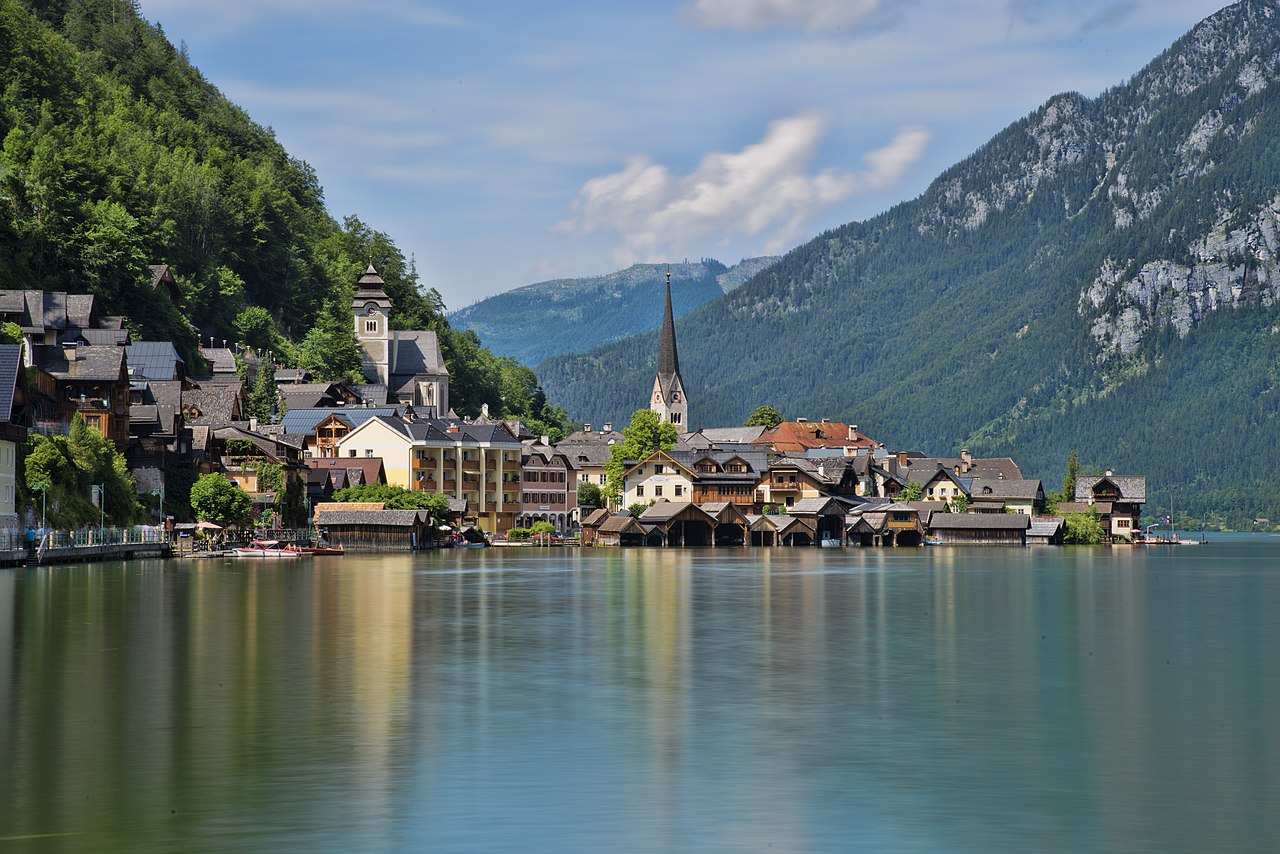

The problems and opportunities of greatly-increased tourism in Hallstatt were covered byÂ
The Washington Post in August 2019. Halstatts tourism began in the 19th century but greatly increased after it was named aÂ
UNESCO World Heritage Site in 1997. It became popular among East Asian tourists in 2006 when it was featured on a South Korean television show.
[Social media images of Hallstatt, captioned the mostÂ
Instagrammable town in the world,Â
went viral in Eastern and Southeast Asia. A replica was plannedÂ
and then built in China in 2011 inÂ
Huizhou,Â
Guangdong province, HallstattsÂ
twin town. In 2013, it was rumored in China to be the model for the movieÂ
Frozens Arendelle village. By 2017, local churches were employingÂ
bouncers to prevent services being disrupted by tourists.
 In 2020, the town had a population of 780, and estimates of 10,000 to nearly 30,000 tourists per day, primarily via bus tours which bring tourists briefly into the town for photo opportunities, then quickly move on.Hallstatts economy depends on tourism, but according to locals the day-visitors drive away tourists who would stay longer. Hallstatt became the prime example ofÂ
overtourism in Austria and led to controversies around limiting the number of tourists. The Austrian Public Broadcasting Organization made multiple documentaries about the situation.In 2020, the town focused on quality tourism. From autumn 2020 there are assigned time slots for tour buses to cope with the problem.
 The arrivals will be limited to 54 per day, which is about half of the current number. Buses with an overnight booking in the town will receive preference.In August 2023, it was reported that locals had protested against overtourism, with the town of just 700 residents being visited by up to 10,000 visitors per day during the high season.


 Newspaper from Colombia
 - Social interactions and entertainment - 0 - 18 Nov 23 00:05
 Facebook
 Instagram
 Discord
 Reddit