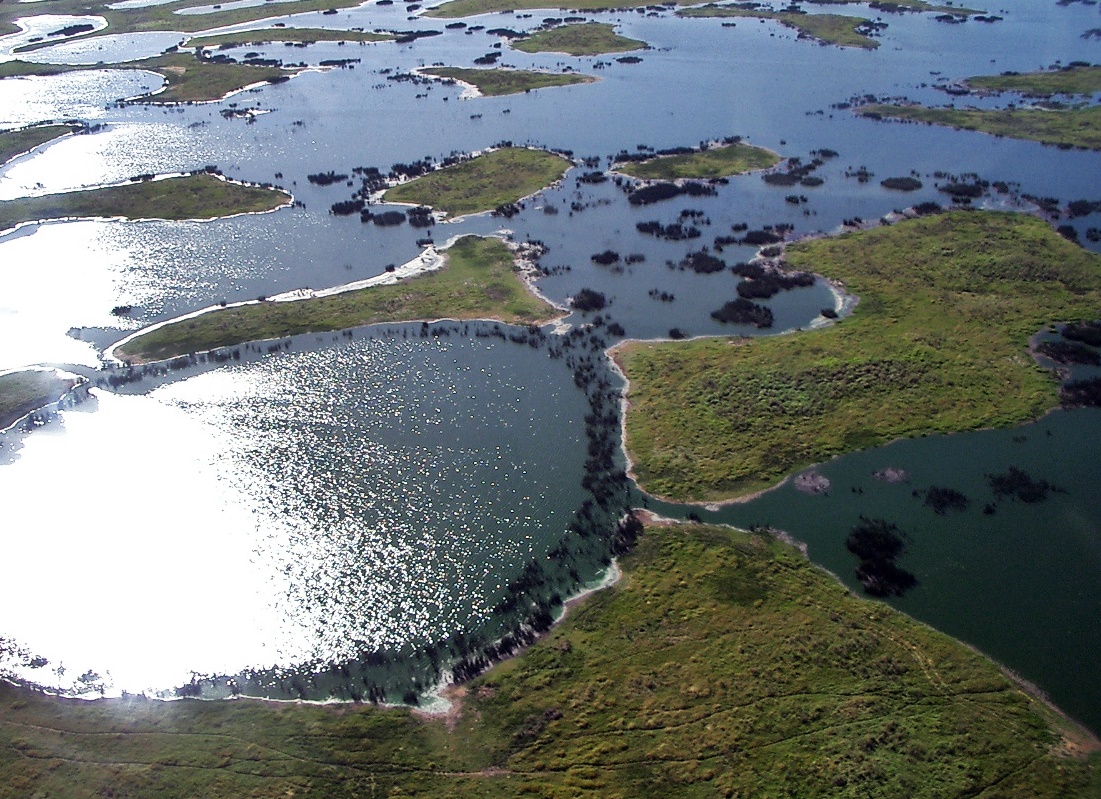
TheÂ
Pantanal (Portuguese pronunciation:Â
) is aÂ
natural region encompassing the worlds largest tropicalÂ
wetland area, and the worlds largestÂ
flooded grasslands. It is located mostly within theÂ
Brazilian state ofÂ
Mato Grosso do Sul, but it extends intoÂ
Mato Grosso and portions ofÂ
Bolivia andÂ
Paraguay. It sprawls over an area estimated at between 140,000 and 195,000Â km
2 (54,000 and 75,000 sq mi). Various subregional ecosystems exist, each with distinctÂ
hydrological,Â
geological andÂ
ecological characteristics; up to 12 of them have been defined.

Roughly 80% of the Pantanal floodplains are submerged during the rainy seasons, nurturing aÂ
biologically diverse collection ofÂ
aquatic plants and helping to support a dense array of animal species.

Floodplain ecosystems such as the Pantanal are defined by their seasonalÂ
inundation andÂ
desiccation.They shift between phases of standing water and phases of dry soil, when the water table can be well below the root region. Soils range from high levels ofÂ
sand in higher areas to higher amounts ofÂ
clay andÂ
silt inÂ
riverine areas.Elevation of the Pantanal ranges from 80 to 150 m (260 to 490 ft) above sea level. Annual rainfall over the flood basin is between 1,000 and 1,500 mm (39 and 59 in), with most rainfall occurring between November and March. Annual average precipitation ranged from 920 to 1,540 mm in the years 1968-2000. In theÂ
Paraguay River portion of the Pantanal, water levels rise between two meters to five meters seasonally; water fluctuations in other parts of the Pantanal are less than this. Flood waters tend to flow slowly (2 to 10 cm (0.79 to 3.94 in) per second) due to the low gradients and high resistance offered by the dense vegetation.When rising river waters first contact previously dry soil, the waters become oxygen-depleted, rendering the water environsÂ
anoxic. Many naturalÂ
fish kills can occur if there are no oxygenated water refuges available. The reason for this remains speculative: it may be due to the growth ofÂ
toxin-producing bacteria in the deoxygenated water rather than as a direct result of lack of oxygen.Â

Lowland Tapir

Giant AnteaterÂ

Capybara

Black Howler MonkeysÂ

Southern Tamandua

Crested CaracaraÂ
.Â

 Newspaper from Colombia
 - Social interactions and entertainment - 4 - 25 Nov 23 00:02


 Facebook
 Instagram
 Discord
 Reddit