
 Newspaper from Colombia
Chile - Rapa Nui National Park & Rapa Nui mythology | Tweet
Published in Turkey  - Social interactions and entertainment - 2 - 29 Nov 23 00:06

Rapa Nui National Park (Spanish: Parque nacional Rapa Nui) is a national park and UNESCO World Heritage Site located on Easter Island, Chile. Rapa Nui is the Polynesian name of Easter Island; its Spanish name is Isla de Pascua. The island is located in the southeastern Pacific Ocean, at the southeastern extremity of the Polynesian Triangle. The island was taken over by Chile in 1888. Its fame and World Heritage status arise from the 887 extant stone statues known by the name moai, whose creation is attributed to the early Rapa Nui people who inhabited the island starting between 300 and 1200 AD. Much of the island has been declared as Rapa Nui National Park which, on 22 March 1996, UNESCO designated a World Heritage Site under cultural criteria (i), (iii), (v). Rapa Nui National Park is now under the administrative control of the Ma´u Henua Polynesian Indigenous Community, which is the first autonomous institute on the island. The indigenous Rapa Nui people have regained authority over their ancestral lands and are in charge of the management, preservation and protection of their patrimony. On the first of December 2017, the ex-President Michelle Bachelet returned ancestral lands in the form of the Rapa Nui National Park to the indigenous people. For the first time in history, the revenue generated by the National Park is invested in the island and used to conserve the natural heritage.

Ahu Akivi moai that face the ocean

Restored stone houses at Orongo
The moai in the park are of varying height from 2 to 20 metres (6 to 65 ft). The volcanic rock formations quarried for sculpting are a distinctive yellow-brown volcanic tuff found only at the Ranu Raraku on the southeast side of the island. Some of the moai were also carved from red scoria. The ceremonial shrines where they are erected for offering worship are known as ahu. Of impressive size and form, they are normally built close to the coast and parallel to it. Many unfinished moai are also found in the quarries. The production and transportation of the 887 statues are considered remarkable creative and physical feats. The moai have been under restoration since 1950. The period between 1837 and 1864 was a critical time when, for reasons that remain unknown, all the standing statues were toppled (probably during the tribal wars), although with little damage. Subsequently they were retrieved and returned to their original positions during the period of restoration with international assistance. The moai represented a clans most revered forebears who were believed to bestow ‘mana’ on living leaders. The park also has a few petroglyphs and paintings.
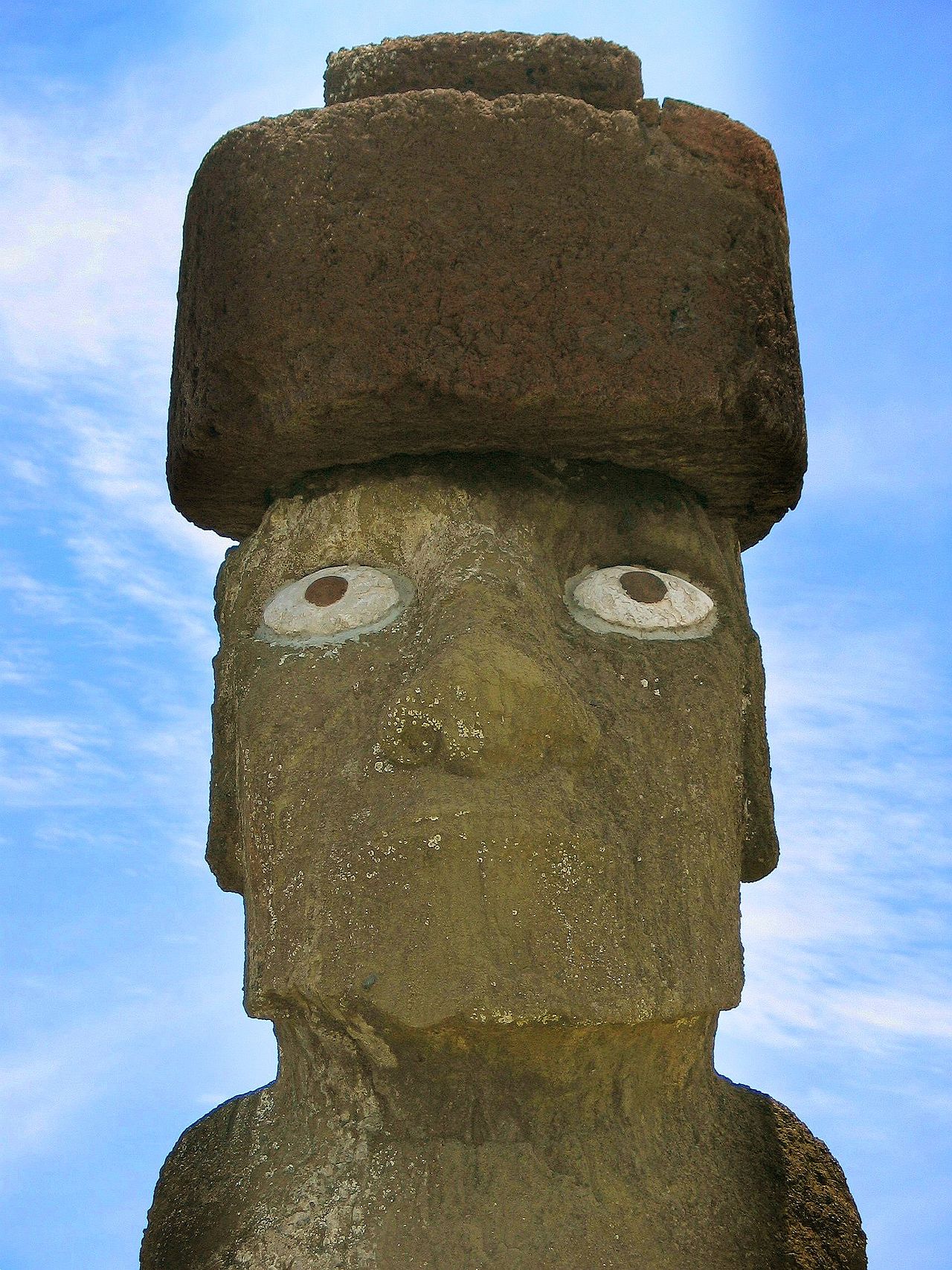
The moai with headgear at Ahu Tahai, restored with coral eyes by the American archaeologist William Mullo

Rano Kau crater
Rapa Nui mythology
Rapa Nui mythology, also known as Pascuense mythology or Easter Island mythology, refers to the native myths, legends, and beliefs of the Rapa Nui people of Easter Island in the south eastern Pacific Ocean.
 All the fifteen standing moai of Ahu Tongariki.
According to Rapa Nui mythology Hotu Matua was the legendary first settler and ariki mau (supreme chief or king) of Easter Island. Hotu Matua and his two-canoe (or one double hulled canoe) colonising party were Polynesians from the now unknown land of Hiva Nuku Hiva, Hiva Oa, Fatu Hiva, Mount Oave, Marquesas Islands, Tahiti, Fenua. They landed at Anakena beach and his people spread out across the island, sub-divided it between clans claiming descent from his sons, and lived for more than a thousand years in their isolated island home at the southeastern tip of the Polynesian Triangle until the arrival of Dutch captain Jacob Roggeveen, who arrived at the island in 1722
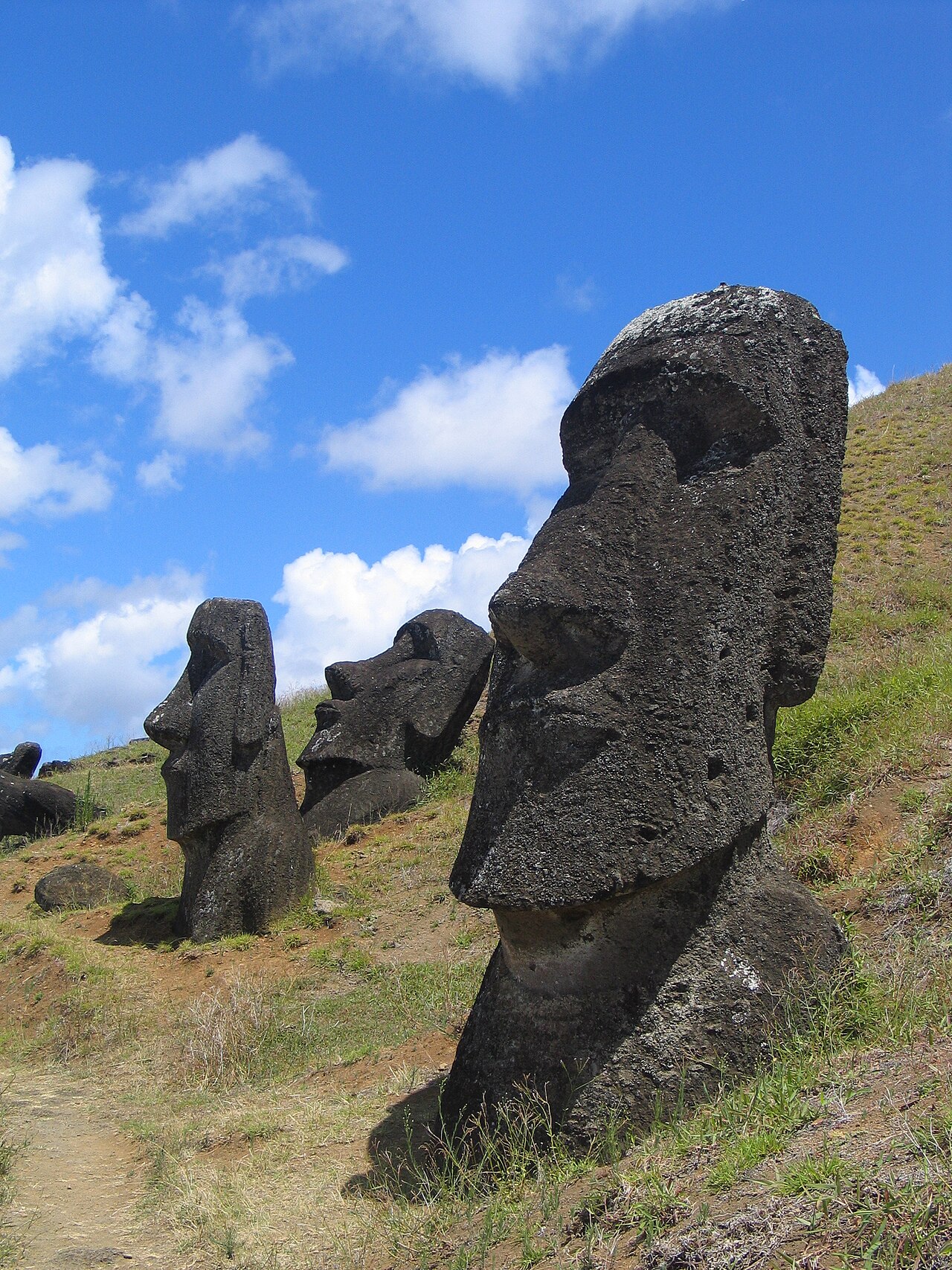
The most visible element in the culture was the production of massive statues called moai that represented deified ancestors. It was believed that the living had a symbiotic relationship with the dead where the dead provided everything that the living needed (health, fertility of land and animals, fortune etc.) and the living through offerings provided the dead with a better place in the spirit world. Most settlements were located on the coast and moai were erected along the coastline, watching over their descendants in the settlements before them, with their backs toward the spirit world in the sea.Â
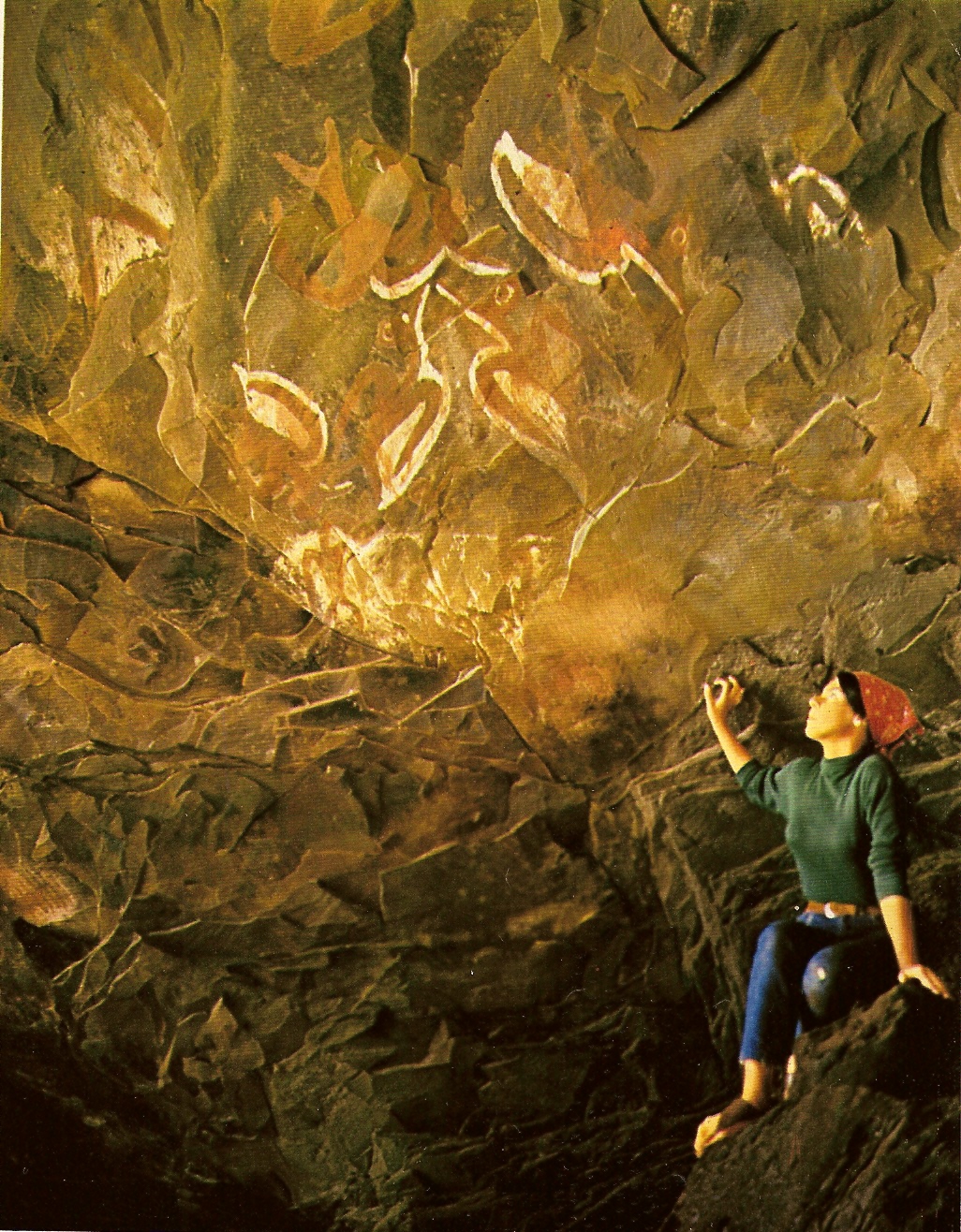 
Birdmen (Tangata manu) paintings in the so-called Cannibal Cave
The Tangata manu or bird-man cult succeeded the islands Moai era when warfare erupted over dwindling natural resources and construction of statues stopped. The deity Make-make was the chief god of the birdman cult. The cult declined after the island population adopted Catholicism, though the birdman popularity and memory was not erased and it is still present in decoration of the islands church.
In the Rapa Nui mythology, the deity Make-make was the chief god of the birdman cult, and the other three deities associated with it were Hawa-tuu-take-take (the Chief of the eggs, a male god), his wife Vie Hoa, and another female deity named Vie Kenatea. Each of these four also had a servant god who was associated with them. The names of all eight would be chanted by contestants during the various rituals preceding the egg hunt.

Makemake with two birdmen, carved from red scoria
Makemake, as a face with large eyes or perhaps a skull with large eye sockets and a phallic nose, is a frequent subject of the Rapa Nui petroglyphs
Métraux states that Easter Islands greatest religious festival, the only one concerning which circumstantial details survive, was that of the bird-man, intimately linked with the cult of the god Makemake.
Makemake drove the birds to nest on the islet of Motu Nui (big islet), the center of the tangata-manu (bird-man) sect. Four gods were associated with it: Makemake, Haua-tuꞌu-take-take (Chief of the eggs, usually simply called Haua), vîꞌe Hoa (Hauas wife) and vîꞌe Kenatea. Each of the four gods had a supernatural servant, whose names were given in the ceremonies.
The ivi atua was the seer who has the vision to select who swam to Motu Nui. A hopu was one of those who make the swim to the islet. Per Englert, the hopu manu were those who served the tagata manu and, upon finding the first manutara egg, took it to Orongo . The manu tara, or sooty tern, was the bird that the ceremony centred on; it was the first manu tara egg that was the goal of the ceremony.
 

Motu Nui, with the smaller Motu Iti in front and the isolated sea stack of Motu Kau Kau between them and the viewer. Viewed from the top of a 250 meters (820 feet) sea cliff at Orongo.
Support
tavi29CynaraGaladraelChocolataMaisieMaisieMaisieMaisievisatorComments (2)

 Facebook
 Instagram
 Discord
 Reddit