
The Ajanta Caves are 29 rock-cut Buddhist cave monuments dating from the second century BCE to about 480 CE in the Aurangabad District of Maharashtra state in India. Ajanta Caves are a UNESCO World Heritage Sites. Universally regarded as masterpieces of Buddhist religious art, the caves include paintings and rock-cut sculptures described as among the finest surviving examples of ancient Indian art, particularly expressive paintings that present emotions through gesture, pose and form
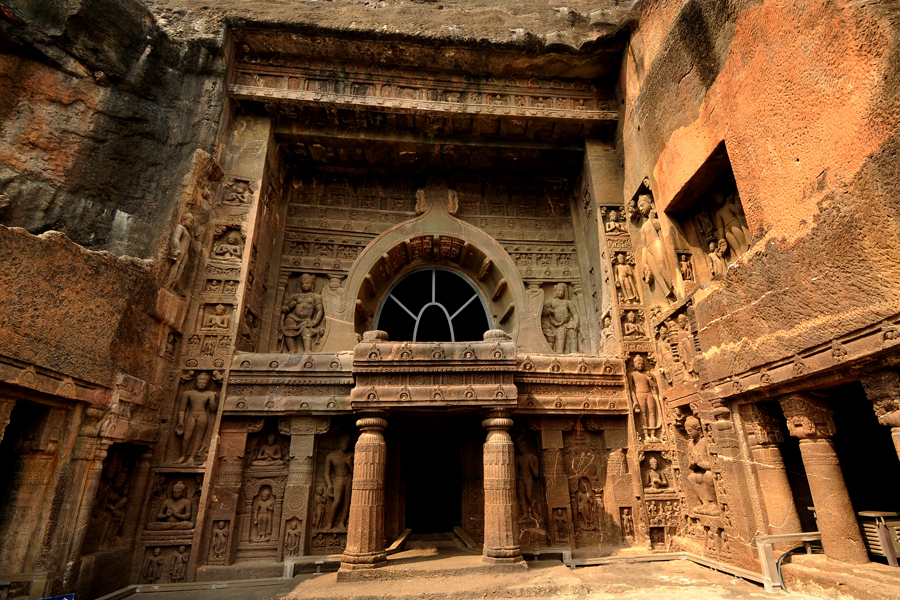
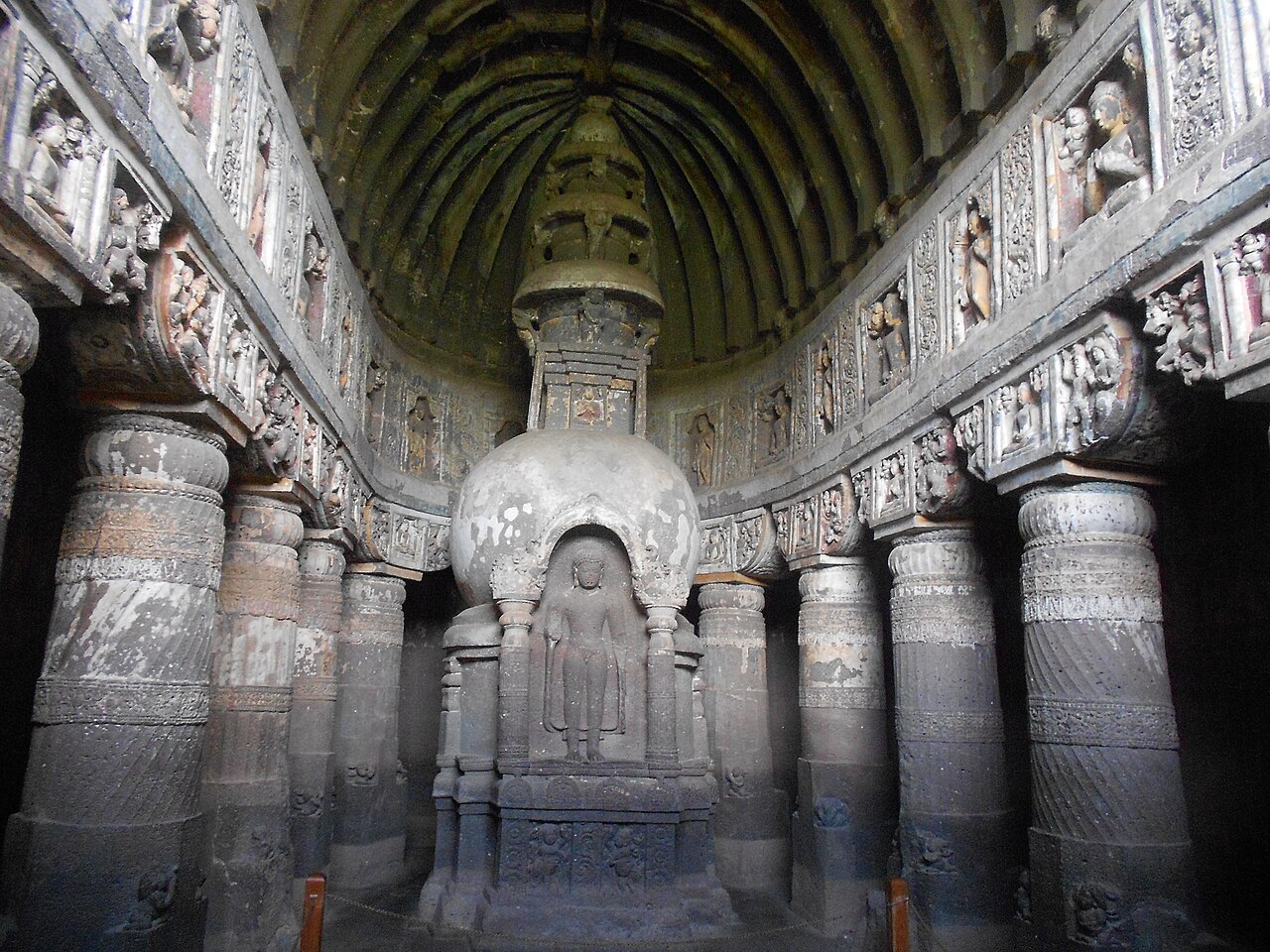
The caves were built in two phases, the first starting around the second century BCE and the second occurring from 400 to 650 CE, according to older accounts, or in a brief period of 460–480 CE according to later scholarship. The Ajanta Caves constitute ancient monasteries (Viharas) and worship-halls (Chaityas) of different Buddhist traditions carved into a 75-metre (246 ft) wall of rock. The caves also present paintings depicting the past lives and rebirths of the Buddha, pictorial tales from Aryasuras Jatakamala, and rock-cut sculptures of Buddhist deities. Textual records suggest that these caves served as a monsoon retreat for monks, as well as a resting site for merchants and pilgrims in ancient India. While vivid colours and mural wall paintings were abundant in Indian history as evidenced by historical records, Caves 1, 2, 16 and 17 of Ajanta form the largest corpus of surviving ancient Indian wall-paintings


The Ajanta cave arts are a window into the culture, society and religiosity of the native population of India between the 2nd century BCE and 5th century CE. Different scholars have variously interpreted them from the perspective of gender studies, history, sociology, and the anthropology of South Asia. The dress, the jewelry, the gender relations, the social activities depicted showcase at least a lifestyle of the royalty and elite, and in others definitely the costumes of the common man, monks and rishi depicted therein. They shine light on life in India around mid 1st millennium CE
The Ajanta artworks provide a contrast between the spiritual life of monks who had given up all materialistic possessions versus the sensual life of those it considered materialistic, luxurious, symbols of wealth, leisurely and high fashion. Many frescos show scenes from shops, festivals, jesters at processions, palaces and performance art pavilions. These friezes share themes and details of those found in Bharhut, Sanchi, Amaravati, Ellora, Bagh, Aihole, Badami and other archaeological sites in India. Ajanta caves contributes to visual and deive sense of the ancient and early medieval Indian culture and artistic traditions, particularly those around the Gupta Empire era period




 Newspaper from Colombia
 - Social interactions and entertainment - 0 - 19 Dec 23 00:03
 Facebook
 Instagram
 Discord
 Reddit