Published in Turkey - Social interactions and entertainment - 0 - 08 Jan 24 00:04
Traditional formal dress of the Classic/contact period, including a dog-skin cloak (kahu kuri), and a mere or patu (short edged weapon).
MÄori culture (MÄori: MÄoritanga) is the customs, cultural practices, and beliefs of the indigenous MÄori people of New Zealand. It originated from, and is still part of, Eastern Polynesian culture. MÄori culture forms a distinctive part of New Zealand culture and, due to a large diaspora and the incorporation of MÄori motifs into popular culture, it is found throughout the world. Within MÄoridom, and to a lesser extent throughout New Zealand as a whole, the word MÄoritanga is often used as an approximate synonym for MÄori culture, the MÄori-language suffix -tanga being roughly equivalent to the qualitative noun-ending -ness in English.[ MÄoritanga has also been translated as MÄori way of life. The term kaupapa, meaning the guiding beliefs and principles which act as a base or foundation for behaviour, is also widely used to refer to MÄori cultural values
A wharenui (meeting house) at ÅŒhinemutu village, Rotorua, with a tekoteko on the top.
Early MÄori objects similar to Polynesian forms (Wairau Bar, Marlborough), note the volcanic glass from the North Island (top left)
Traditional formal dress of the Classic/contact period. A hei-tiki around her neck, pounamu earring and shark tooth earring, and two huia feathers in her hair.
Traditional MÄori Waitangi Day celebrations at Waitangi
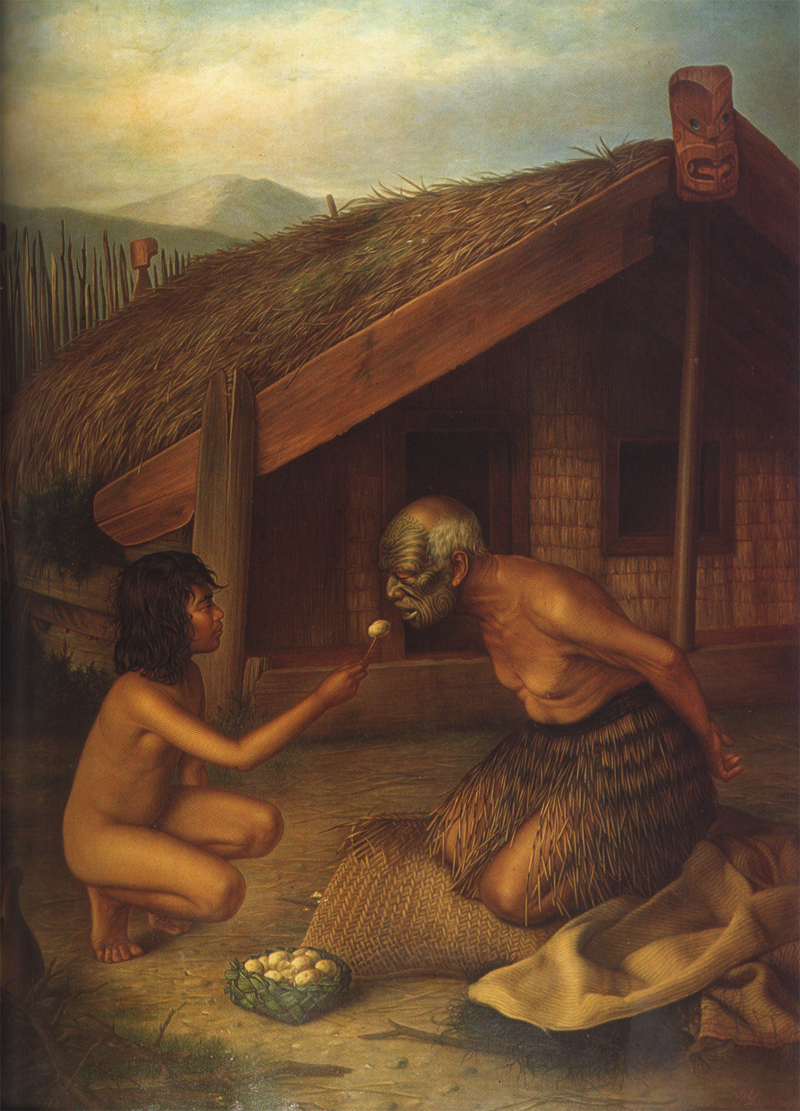
A tohunga under tapu could not eat with their hands for an extended period.
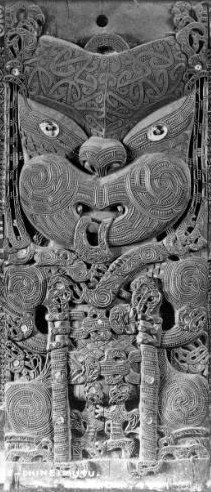
Tama-te-kapua, ancestor of Te Arawa, depicted in a carving at Tamatekapua meeting house in Ohinemutu, Rotorua, circa 1880.
Carved wharenui at Waitangi marae
Late 20th-century carving depicting the mythological navigator Kupe fighting two sea creatures
Haka (/ˈhÉ‘ËkÉ™/, /ˈhækÉ™/) singular haka, in both MÄori and English) are a variety of ceremonial dances in MÄori culture. Haka are often performed by a group, with vigorous movements and stamping of the feet with rhythmically shouted accompaniment. Haka have been traditionally performed by both men and women for a variety of social functions within MÄori culture. They are performed to welcome distinguished guests, or to acknowledge great achievements, occasions, or funerals.
._________
_______
When performed by men, haka feature protruding of the tongue.

 Newspaper from Colombia
 - Social interactions and entertainment - 0 - 08 Jan 24 00:04
 Traditional formal dress of the Classic/contact period, including a dog-skin cloak (kahu kuri), and a mere or patu (short edged weapon).


 Carved wharenui at Waitangi marae


 Facebook
 Instagram
 Discord
 Reddit