Junkanoo |
Published in Turkey  - Social interactions and entertainment - 0 - 03 Apr 24 00:05

Junkanoo is a festival that was originated during the period of African chattel slavery in British American colonies. It is practiced most notably in Jamaica, The Bahamas and Belize, and historically in North Carolina and Miami, where there are significant settlements of West Indian people during the post-emancipation era. In the present day, there are considerable variations in performance and spelling, but there are the shared elements of masquerade (or masking), drumming, dance, and parading.

In many territories, Junkanoo is observed around the week of Christmas. These Christmas-time cultural parades are predominantly showcased in Jamaica. In The Bahamas, it was initially called Junkanoo and is said to date back to the 1700s where it is celebrated year round. In Belize, where the music is also mainstreamed, competition results are hotly contested. There are also Junkanoo parades in Miami in June and Key West in October, where local black populations have their roots in the Caribbean.
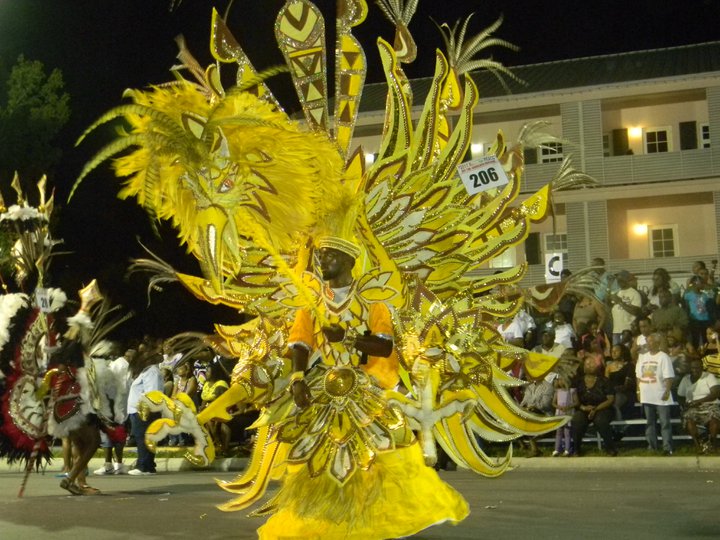
Historian Stephen Nissenbaum described the festival as it was performed in 19th-century North Carolina:Essentially, it involved a band of black men—generally young—who dressed themselves in ornate and often bizarre costumes. Each band was led by a man who was variously dressed in animal horns, elaborate rags, female disguise, whiteface (and wearing a gentlemans wig!), or simply his Sunday-go-to-meeting-suit. Accompanied by music, the band marched along the roads from plantation to plantation and town to town, accosting whites and sometimes even entering their houses. In the process, the men performed elaborate and (to white observers) grotesque dances that were probably of African origin. In return for this performance, they always demanded money (the leader generally carried a small bowl or tin cup for this purpose), though whiskey was an acceptable substitute.


.
Support
Galadraeltavi29visatorvisator
Comments (0)

 Newspaper from Colombia
 Facebook
 Instagram
 Discord
 Reddit