All About Haft Seen Table |
Published in United States of America  - Political debates and analysis - 0 - 21 Mar 18 03:09
Haft-Seen also spelled as Haft SÄ«n (Persian: Ù‡Ùت‌سین‎‎, the seven seens) is a tabletop (sofreh) arrangement of seven symbolic items
traditionally displayed at
Nowruz, the Persian new year. The haft-seen table includes seven items all
starting with the letter Seen (letter s) (fa) (س) in the Persian
alphabet. The Haft-Seen table items
Sabzeh (سبزه) – wheat, barley, mung bean or lentil sprouts growing in a dish - symbolizing rebirthSamanu (سمنو) – sweet pudding made from wheat germ – symbolizing affluenceSenjed (سنجد) – dried oleaster Wild Olive fruit – symbolizing love Seer (سیر) – garlic – symbolizing the medicine and healthSeeb (سیب) – apple – symbolizing beautySomÄq (سماق) – sumac fruit – symbolizing (the color of) sunriseSerkeh (سرکه) – vinegar – symbolizing old-age and patience
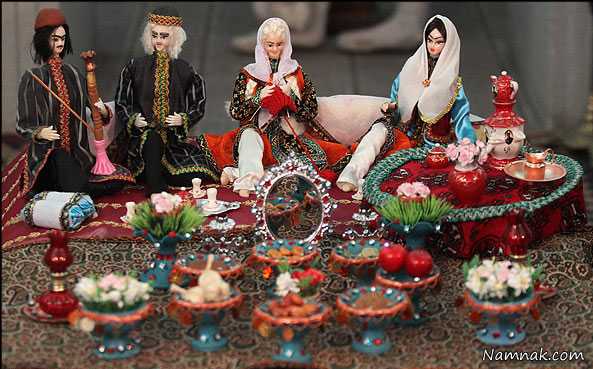
The following items may also appear on the Haft-Seen table as ornaments or for the sake of completeness. Although some of these items
are Persian symbols, they are not the main part of the traditional
Haft-Seen.
The holy bookDivan-e Hafez, a Persian poetry booka mirrora goldfish in a bowl represents life and the end of astral year-picas (Goldfish is originally a symbol of Chinese new year)a low brazier full of firea lampsprays of cypress or pinepomegranatespainted eggscoins as a symbol of wealthcandles for each member of the familya bowl of waterwheat or bread
Support
Comments (0)
 Newspaper from Iran
 Facebook
 Instagram
 Discord
 Reddit