
 Newspaper from Canada
Our treasure - Part 2 | Tweet
Published in Ireland  - Social interactions and entertainment - 9 - 25 Aug 18 09:57
Hello dear friends
In this article we will continue where we stopped in last article about Irish tradition and culture.
Lean on and enjoy :D
Merrow
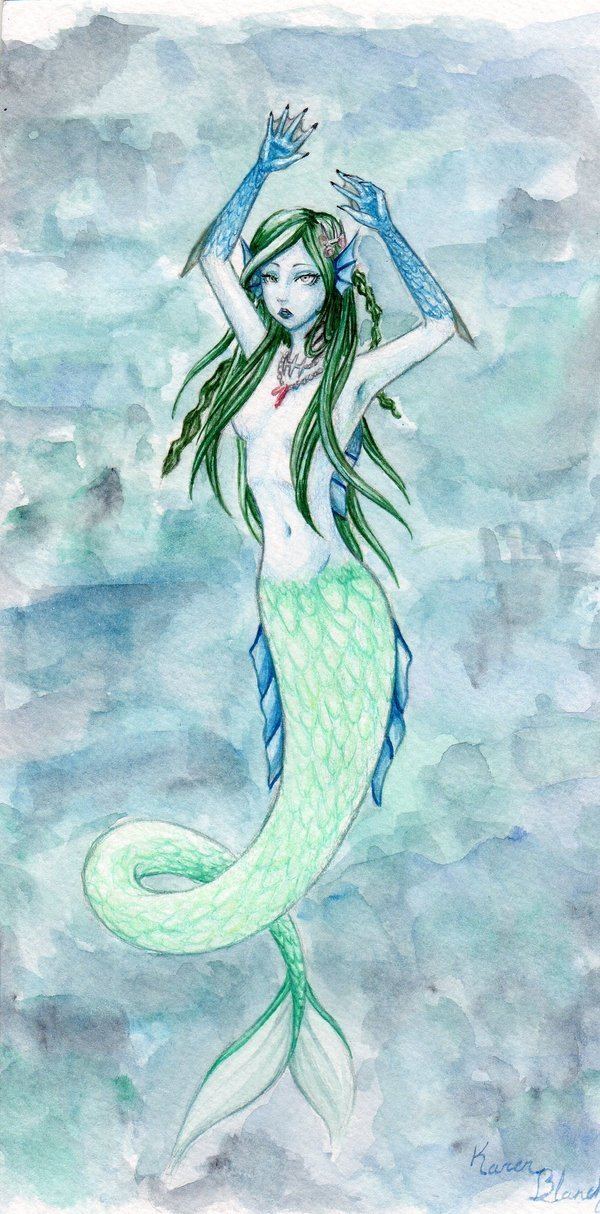
The word merrow or moruadh comes from the Irish muir (meaning sea) and oigh (meaning maid) and refers specifically to the female of the species. Mermen - the merrows male counterparts - have been rarely seen. They have been described as exceptionally ugly and scaled, with pig-like features and long, pointed teeth. Merrows themselves are extremely beautiful and are promiscuous in their relations with mortals. The Irish merrow differs physically from humans in that her feet are flatter than those of a mortal and her hands have a thin webbing between the fingers. It should not be assumed that merrows are kindly and well-disposed towards mortals. As members of the sidhe, or Irish fairy world, the inhabitants of Tir fo Thoinn (the Land beneath the Waves) have a natural antipathy towards humans. In some parts of Ireland, they are regarded as messengers of doom and death. Merrows have special clothing to enable them to travel through ocean currents. In Kerry, Cork and Wexford, they wear a small red cap made from feathers, called a cohullen druith. However, in more northerly waters they travel through the sea wrapped in sealskin cloaks, taking on the appearance and attributes of seals. In order to come ashore, the merrow abandons her cap or cloak, so any mortal who finds these has power over her, as she cannot return to the sea until they are retrieved. Hiding the cloak in the thatches of his house, a fisherman may persuade the merrow to marry them. Such brides are often extremely wealthy, with fortunes of gold plundered from shipwrecks. Eventually the merrow will recover the cloak, and find her urge to return to the sea so strong that she leaves her human husband and children behind. Many coastal dwellers have taken merrows as lovers and a number of famous Look out!Irish families claim their descent from such unions, notably the OFlaherty and OSullivan families of Kerry and the MacNamaras of Clare.Â
The Pookas
No fairy is more feared in Ireland than the pooka. This may be because it is always out and about after nightfall, creating harm and mischief, and because it can assume a variety of terrifying forms. Old people used to say that the Pookas were very numerous...long ago..., were wicked-minded, black-looking, bad things...that would come in the form of wild colts, with chains hanging about them, and that did much to harm unwary travellers. Also, children were warned not to eat overripe blackberries, because this was a sign that the pooka has befouled them.According to legend, the púca is a deft shapeshifter, capable of assuming a variety of terrifying or pleasing forms. It can take a human form, but will often have animal features, such as ears or a tail. As an animal, the púca will most commonly appear as a horse, cat, rabbit, raven, fox, wolf, goat, goblin, or dog. No matter what shape the púca takes, its fur is almost always dark. It most commonly takes the form of a sleek black horse with a flowing mane and luminescent golden eyes.If a human is enticed onto a pookas back, it has been known to give them a wild ride; however, unlike a kelpie, which will take its rider and dive into the nearest stream or lake to drown and devour him/her, the pooka will do its rider no real harm. However, according to some folklorists the only man ever to ride the púca was Brian Boru, High King of Ireland, by using a special bridle incorporating three hairs of the pookas tail. The pooka has the power of human speech, and has been known to give advice and lead people away from harm. Though the pooka enjoys confusing and often terrifying humans, it is considered to be benevolent.
 
Festival of Imbolc
With winter behind them marking the rebirth of the sun was important. It was the start of a new agricultural season and when the colours of Irish landscape would change. Those who did survive the winter would be thankful for the lighter and warmer days ahead. Most celebrations around this time of year would involve feasting and making an offering for the Celtic goddess, Brigid. As a goddess of healing and fertility she is the daughter of Dagda of the Tuatha Dé Danann in Irish Mythology. In pre-Christian times people would flock to healing wells during the celebration of Imbloc. Pilgrimages to such places involved the practice of walking clockwise around healing well or a wishing tree located close by. People would bring strips of cloth to be dipped into the well then tied to a branch of the tree. When Christianity spread throughout Ireland it gradually replaced the pagan beliefs. Important days in the pagan Calendar, such as Imbloc, were replaced by Christian dates. Imobloc was replaced by the feast day of St Brigid, who was the possible Christian version of the Celtic goddess Brigid. Another important ritual replaced under the Christianisation of Ireland was the pilgrimages to healing wells. Not much changed for these pilgrimages, people still walked around the well while saying prayers, and tying the cloth to branches of a tree. To this day pilgrimages to holy wells such as Doon are still popular, considered an important tradition for devout Catholics.
 
Fion Mac Cumhaill
Local legend tells that the giant Fionn mac Cumhaill built the Giant’s Causeway—across the sea from Ireland all the way to Scotland—in response to a challenge from the Scottish giant Benandoner. When Fionn saw Benandoner, though, and realized how much bigger he was, he would have fled, but his wife, Oona, had him dress up as a baby. She tucked him into a crib, then began cooking. When Benandoner arrived across the causeway, Oona told him that he was away, and invited the Scottish giant inside to wait. When he saw Fionn in the crib he decided that, to have a baby that big, Fionn must be truly enormous. Benandoner then tried to intimidate Oona by crushing rocks with his pinky finger, but she just smiled at him and handed a rock to Fionn, who crushed it to cheese. (It helped, of course, that Fionn’s rock had always been cheese). Oona then gave Benandoner and Fionn each a griddle-cake (Irish name for a pancake). Benandoner bit into his and broke a tooth, which probably had something to do with the pan Oona had baked into it. Fionn, meanwhile, ate his with gusto. Fingals Cave Fingal’s Cave Oona invited Benandoner to feel how sharp and strong the baby’s teeth were. Benandoner, feeling his broken tooth and watching Fionn eat his griddle-cake, declined. He politely begged leave of Oona. He then fled across the causeway, destroying it behind him, not wanting to meet the father of that monstrous baby. Only the two ends were left inact—the columns of the Giant’s causeway, and the columns of Fingal’s Cave, in Scotland (which has plenty of legends of its own). Fionn hopped out of the cradle, praising Oona’s wit, bravery, and beauty. Oona just laughed and handed him a broom to clean up the broken rocks and food.

Fingals CaveÂ
Shamrock
It is believed the shamrock-Ireland association to have religious origins. Although St. Patrick, the founder of Christianity in Ireland and Patron Saint of the Country, never mentioned the shamrock in any of his writings, it is said that the Saint would use this plant as a metaphor to explain the mystery of the Holy Trinity to the pagan celtic. The shamrock, which at first was only associated with St. Patrick, started to become a national symbol when it was first used as an emblem by voluntary Irish militias in the late 18th century. From then, the shamrock as a symbol for Ireland became incredibly popular.
 
Irish traditional music
Gaelic language is really beautiful and unique, so its not wonder that Gaelic songs are breathtaking. I have found couple of them
Gabhaim Molta BrÃghde - Haunting Gaelic song by Aoife NÃ Fhearraigh
Clannad Siúil a Rún (Irish Love Song)

Gaelic Song - Fear a Bhà ta

Amhrán MhuÃnse / The Song of MuÃnis - LÃadan
Cumhaidh an Fhile - Irish song
Thats all for this article, I hope that you liked it.
If you have some complains or suggestions, feel free to comment.
Also, do not forget to subscribe, so you can see when new articles are published :D
Until next time
Regards from
Vojo
In this article we will continue where we stopped in last article about Irish tradition and culture.
Lean on and enjoy :D
Merrow
The word merrow or moruadh comes from the Irish muir (meaning sea) and oigh (meaning maid) and refers specifically to the female of the species. Mermen - the merrows male counterparts - have been rarely seen. They have been described as exceptionally ugly and scaled, with pig-like features and long, pointed teeth. Merrows themselves are extremely beautiful and are promiscuous in their relations with mortals. The Irish merrow differs physically from humans in that her feet are flatter than those of a mortal and her hands have a thin webbing between the fingers. It should not be assumed that merrows are kindly and well-disposed towards mortals. As members of the sidhe, or Irish fairy world, the inhabitants of Tir fo Thoinn (the Land beneath the Waves) have a natural antipathy towards humans. In some parts of Ireland, they are regarded as messengers of doom and death. Merrows have special clothing to enable them to travel through ocean currents. In Kerry, Cork and Wexford, they wear a small red cap made from feathers, called a cohullen druith. However, in more northerly waters they travel through the sea wrapped in sealskin cloaks, taking on the appearance and attributes of seals. In order to come ashore, the merrow abandons her cap or cloak, so any mortal who finds these has power over her, as she cannot return to the sea until they are retrieved. Hiding the cloak in the thatches of his house, a fisherman may persuade the merrow to marry them. Such brides are often extremely wealthy, with fortunes of gold plundered from shipwrecks. Eventually the merrow will recover the cloak, and find her urge to return to the sea so strong that she leaves her human husband and children behind. Many coastal dwellers have taken merrows as lovers and a number of famous Look out!Irish families claim their descent from such unions, notably the OFlaherty and OSullivan families of Kerry and the MacNamaras of Clare.Â
The Pookas
No fairy is more feared in Ireland than the pooka. This may be because it is always out and about after nightfall, creating harm and mischief, and because it can assume a variety of terrifying forms. Old people used to say that the Pookas were very numerous...long ago..., were wicked-minded, black-looking, bad things...that would come in the form of wild colts, with chains hanging about them, and that did much to harm unwary travellers. Also, children were warned not to eat overripe blackberries, because this was a sign that the pooka has befouled them.According to legend, the púca is a deft shapeshifter, capable of assuming a variety of terrifying or pleasing forms. It can take a human form, but will often have animal features, such as ears or a tail. As an animal, the púca will most commonly appear as a horse, cat, rabbit, raven, fox, wolf, goat, goblin, or dog. No matter what shape the púca takes, its fur is almost always dark. It most commonly takes the form of a sleek black horse with a flowing mane and luminescent golden eyes.If a human is enticed onto a pookas back, it has been known to give them a wild ride; however, unlike a kelpie, which will take its rider and dive into the nearest stream or lake to drown and devour him/her, the pooka will do its rider no real harm. However, according to some folklorists the only man ever to ride the púca was Brian Boru, High King of Ireland, by using a special bridle incorporating three hairs of the pookas tail. The pooka has the power of human speech, and has been known to give advice and lead people away from harm. Though the pooka enjoys confusing and often terrifying humans, it is considered to be benevolent.
Festival of Imbolc
With winter behind them marking the rebirth of the sun was important. It was the start of a new agricultural season and when the colours of Irish landscape would change. Those who did survive the winter would be thankful for the lighter and warmer days ahead. Most celebrations around this time of year would involve feasting and making an offering for the Celtic goddess, Brigid. As a goddess of healing and fertility she is the daughter of Dagda of the Tuatha Dé Danann in Irish Mythology. In pre-Christian times people would flock to healing wells during the celebration of Imbloc. Pilgrimages to such places involved the practice of walking clockwise around healing well or a wishing tree located close by. People would bring strips of cloth to be dipped into the well then tied to a branch of the tree. When Christianity spread throughout Ireland it gradually replaced the pagan beliefs. Important days in the pagan Calendar, such as Imbloc, were replaced by Christian dates. Imobloc was replaced by the feast day of St Brigid, who was the possible Christian version of the Celtic goddess Brigid. Another important ritual replaced under the Christianisation of Ireland was the pilgrimages to healing wells. Not much changed for these pilgrimages, people still walked around the well while saying prayers, and tying the cloth to branches of a tree. To this day pilgrimages to holy wells such as Doon are still popular, considered an important tradition for devout Catholics.
Fion Mac Cumhaill
Local legend tells that the giant Fionn mac Cumhaill built the Giant’s Causeway—across the sea from Ireland all the way to Scotland—in response to a challenge from the Scottish giant Benandoner. When Fionn saw Benandoner, though, and realized how much bigger he was, he would have fled, but his wife, Oona, had him dress up as a baby. She tucked him into a crib, then began cooking. When Benandoner arrived across the causeway, Oona told him that he was away, and invited the Scottish giant inside to wait. When he saw Fionn in the crib he decided that, to have a baby that big, Fionn must be truly enormous. Benandoner then tried to intimidate Oona by crushing rocks with his pinky finger, but she just smiled at him and handed a rock to Fionn, who crushed it to cheese. (It helped, of course, that Fionn’s rock had always been cheese). Oona then gave Benandoner and Fionn each a griddle-cake (Irish name for a pancake). Benandoner bit into his and broke a tooth, which probably had something to do with the pan Oona had baked into it. Fionn, meanwhile, ate his with gusto. Fingals Cave Fingal’s Cave Oona invited Benandoner to feel how sharp and strong the baby’s teeth were. Benandoner, feeling his broken tooth and watching Fionn eat his griddle-cake, declined. He politely begged leave of Oona. He then fled across the causeway, destroying it behind him, not wanting to meet the father of that monstrous baby. Only the two ends were left inact—the columns of the Giant’s causeway, and the columns of Fingal’s Cave, in Scotland (which has plenty of legends of its own). Fionn hopped out of the cradle, praising Oona’s wit, bravery, and beauty. Oona just laughed and handed him a broom to clean up the broken rocks and food.
Fingals CaveÂ
Shamrock
It is believed the shamrock-Ireland association to have religious origins. Although St. Patrick, the founder of Christianity in Ireland and Patron Saint of the Country, never mentioned the shamrock in any of his writings, it is said that the Saint would use this plant as a metaphor to explain the mystery of the Holy Trinity to the pagan celtic. The shamrock, which at first was only associated with St. Patrick, started to become a national symbol when it was first used as an emblem by voluntary Irish militias in the late 18th century. From then, the shamrock as a symbol for Ireland became incredibly popular.
Irish traditional music
Gaelic language is really beautiful and unique, so its not wonder that Gaelic songs are breathtaking. I have found couple of them
Gabhaim Molta BrÃghde - Haunting Gaelic song by Aoife NÃ Fhearraigh
Clannad Siúil a Rún (Irish Love Song)

Gaelic Song - Fear a Bhà ta

Amhrán MhuÃnse / The Song of MuÃnis - LÃadan
Cumhaidh an Fhile - Irish song
Thats all for this article, I hope that you liked it.
If you have some complains or suggestions, feel free to comment.
Also, do not forget to subscribe, so you can see when new articles are published :D
Until next time
Regards from
Vojo
Support
AislinnAFKFranky Four FingerseDominations WikilopovJacaWinston Hope SmithBULUTHITTZrinyi MiklosComments (9)



 Facebook
 Instagram
 Discord
 Reddit